Day Six Of The Worker Action Delegation | Nike, Triangle, and the Women Workers Still Fighting
May 31, 2025
More than a century after 146 workers—most of them young immigrant women—were killed in the Triangle Shirtwaist Factory Fire in New York City on 25 March 1911, the same patterns of exploitation continued to persist across continents. The factory fire, which became a pivotal moment for labor rights in the U.S., exposed the deadly consequences of greed, neglect, and the silencing of workers and unions. Factory doors were locked. Fire escapes collapsed. Safety had been sacrificed for profit.
The Triangle Shirtwaist Fire became a national tragedy—but also a catalyst. Outrage over the deaths fueled massive protests and helped spark labor reforms, including stronger fire codes, factory inspections, and the growth of the International Ladies' Garment Workers' Union (ILGWU). It was a moment when the lives of women workers—long disregarded—forced their way into the public conscience.
Yet more than a century later, the question lingers: has the world truly changed?
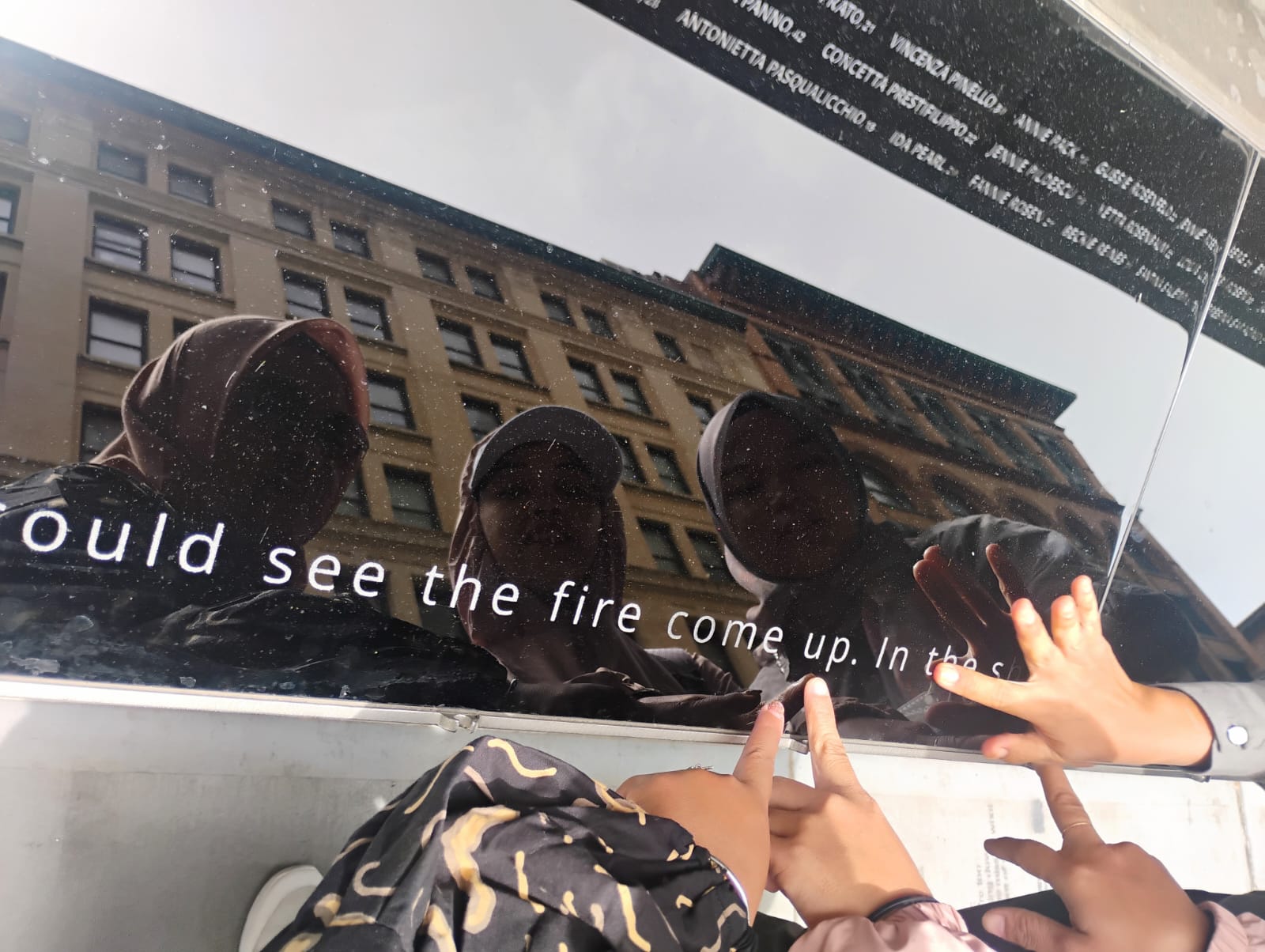
On 31st May, worker activists Dedeh, Dinar, and Leni visited the Triangle Shirtwaist Factory Fire Memorial to honor those lost in the 1911 tragedy. But this visit was not only an act of remembrance—it was a statement. Today, garment workers in Asia, like the three worker activists, face many of the same dangers: poverty wages, union suppression, and production demands that come at the cost of health and safety.
In 1911, the women workers at the Triangle Shirtwaist Factory, some as young as 15, worked seven days a week, 13-hour shifts, with only a 30-minute lunch break, earning just $6 a week. The conditions were harsh and exploitative. A 114 years later - workers like Dedeh, Leni, and Dinar in Nike’s supply chain face similar challenges. Leni was threatened with dismissal when she took a stand against wages being slashed. Dedeh sometimes had to cover the cost of factory materials herself. Dinar works at breakneck speed to sew Nike logos—60 shoes per hour—while selling coffee and noodles during breaks, and working as a freelance photographer, just to meet basic expenses.
Women garment workers like Dedeh, Leni, and Dinar, who create Nike's products in Indonesia, face a system that still treats them as expendable. During the COVID-19 pandemic, they were laid off, had their wages slashed, or were pushed to resign—while Nike was turning record profits. Their wages today often don’t cover even the cost of the shoes they make.
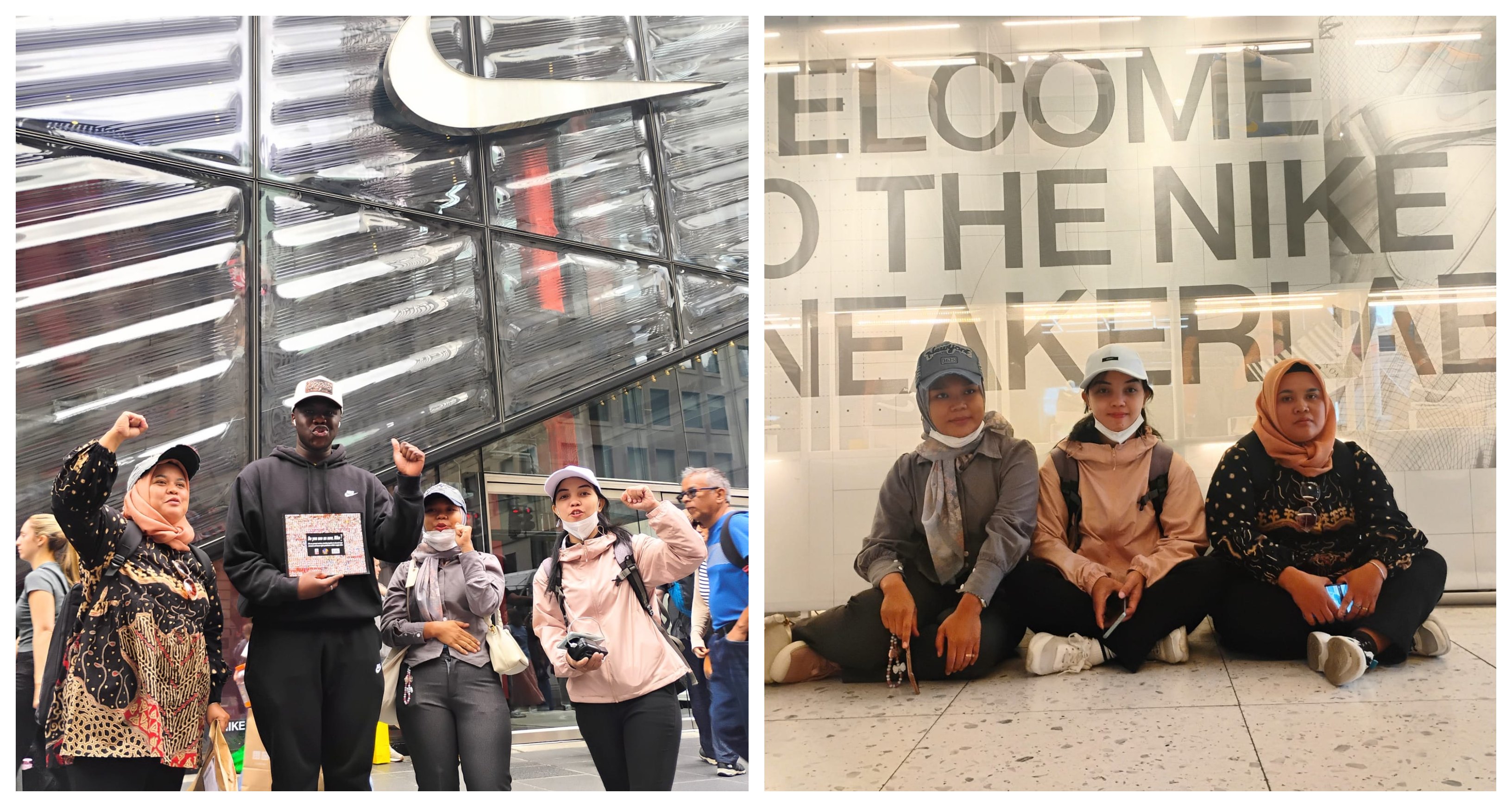 Outside Nike’s store on 5th Avenue, the worker activists spoke with customers about the realities behind global fashion. In a moment that made those injustices tangible, Leni noticed a customer wearing a pair of shoes she had created. It was a striking reminder that the products made in their factories travel the world, while the women workers who make them remain unseen and unheard. These chance encounters aren’t coincidences—they’re the invisible threads of supply chains and brands that profit from keeping workers hidden.
Their stories echo that of the women workers of Triangle: underpaid, silenced, and asked to sacrifice their safety and well-being for someone else’s bottom line. But like the survivors who marched in protest, the worker activists are not staying quiet. They’re confronting Nike directly—traveling over 8,000 miles to bring their demands to the company’s U.S. headquarters, stores, and even the stadiums built with Nike's profit.
Dedeh, Leni, and Dinar are demanding what is owed. And they are reminding the world: the fire never really stopped. It just moved offshore.
Stay tuned for more updates and read: Day Five Of The Worker Action Delegation | Workers Activists File Complaint with Oregon Labor Commissioner

Day Five Of The Worker Action Delegation | Workers Activists File Complaint with Oregon Labor Commissioner
May 30, 2025
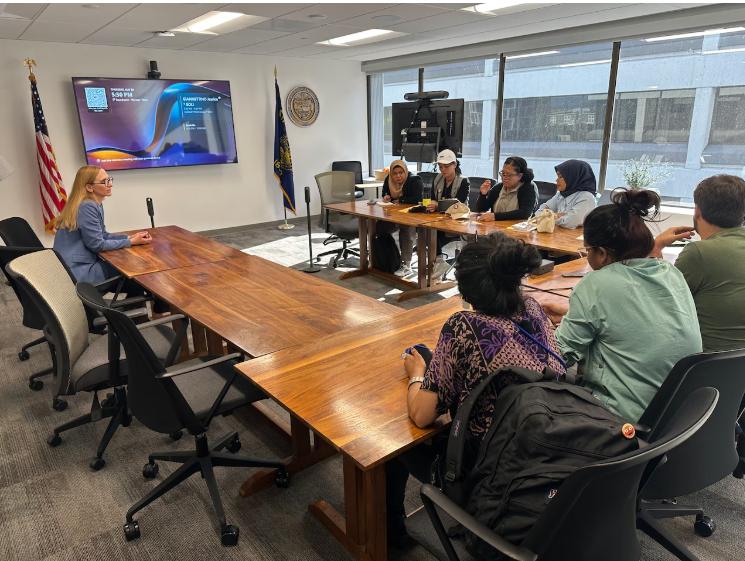
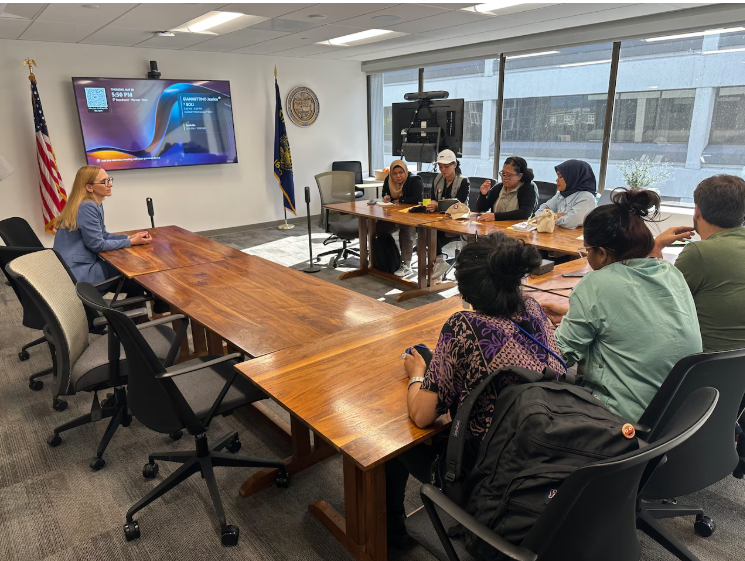
After being denied a meeting with Nike, three Indonesian worker activists—Dedeh, Dinar, and Leni—found an audience with the Oregon Labor Commissioner Christina Stephenson. The Commissioner kept her office open after-hours to hear firsthand testimony and accept their formal complaint about unpaid wages during the pandemic. “This is part of my struggle to get our rights,” said Leni. “We come here so you can see us—while in our hometown, you never see us.”
In their testimony, the workers described wages as low as $190 a month, grueling production targets that don't leave workers with enough time to access the restroom, and a sexual harassment complaint that took over a year to resolve. They emphasized how Nike’s code of conduct promises dignity and safety—but the reality inside its supplier factories tells a different story. The worker activists also spoke about how the cost of a single pair of Air Jordans often exceeds their monthly pay.
Though Nike did not respond to requests for comment, the workers’ message was loud and clear. As Commissioner Stephenson concluded the meeting, she acknowledged their courage and promised action: “We see you. We appreciate the courage it takes to come here. We’ll take your complaints, and we’ll do what we can.” The labor bureau will now issue a notice of the complaint to Nike and offer the brand a chance to respond.
Stay tuned for more updates and read: Day Four Of The Worker Action Delegation | Rename Hayward Field To ‘Hidup Buruh’
Day Four Of The Worker Action Delegation | Rename Hayward Field To ‘Hidup Buruh’
May 29, 2025
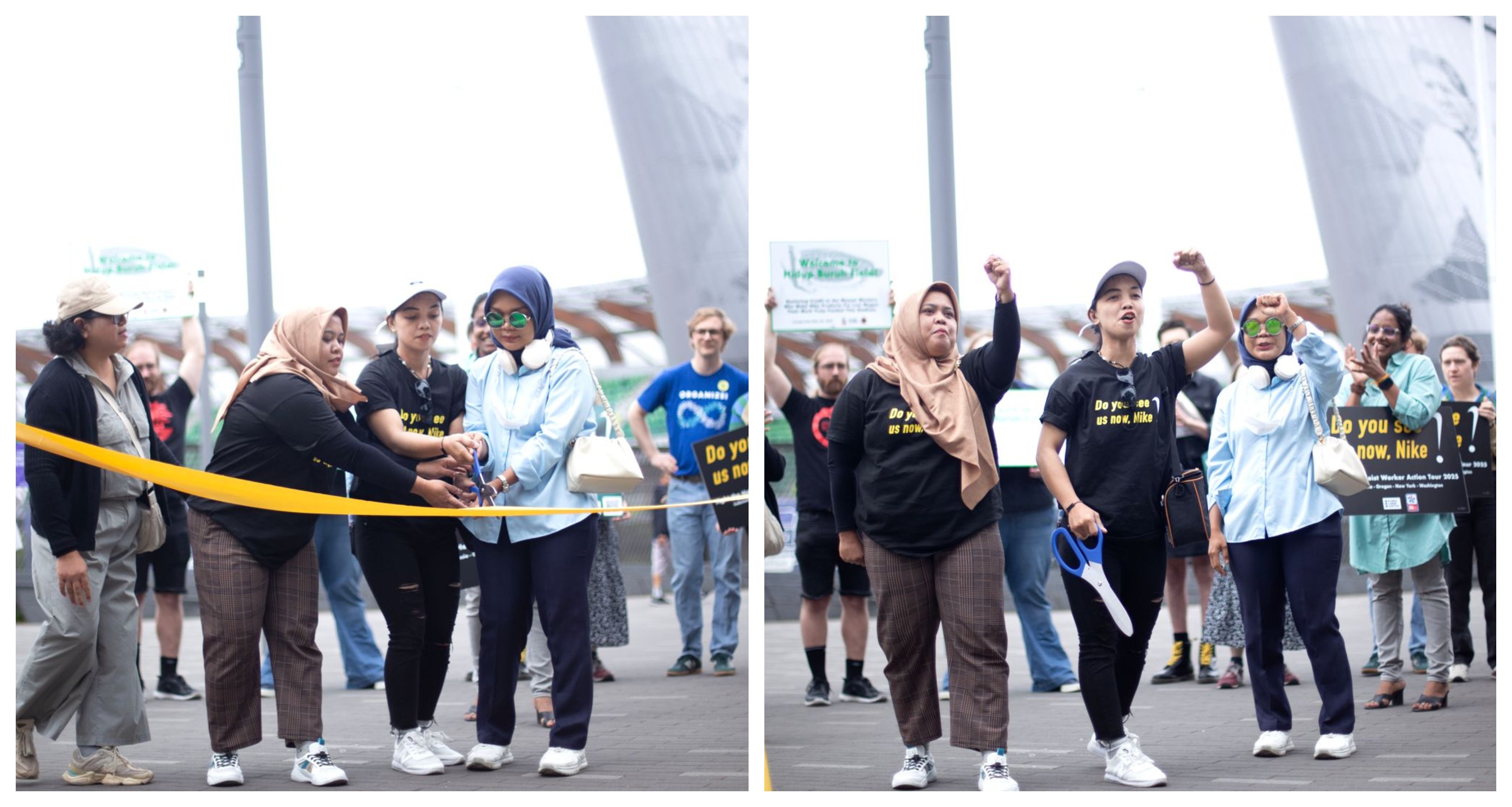
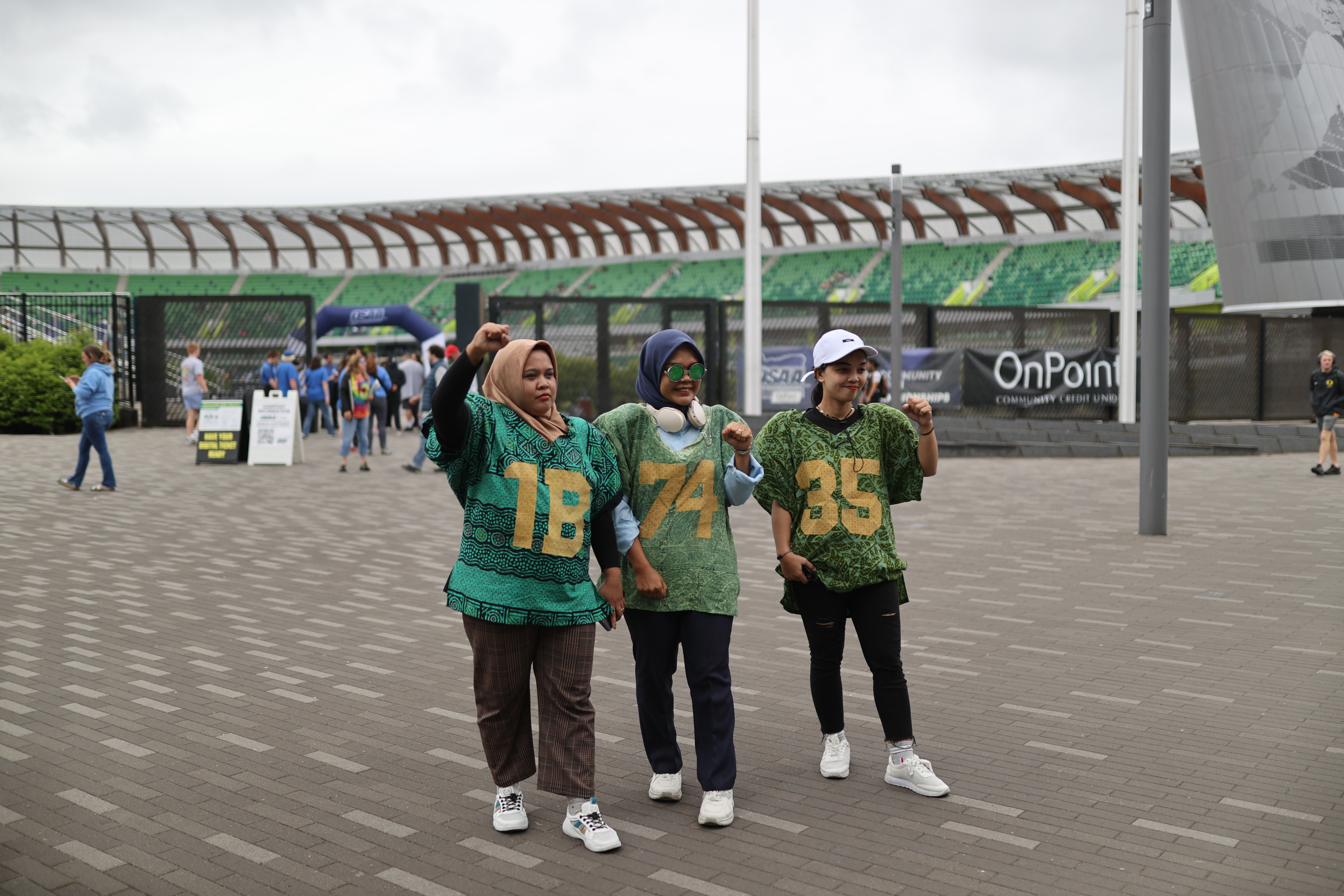
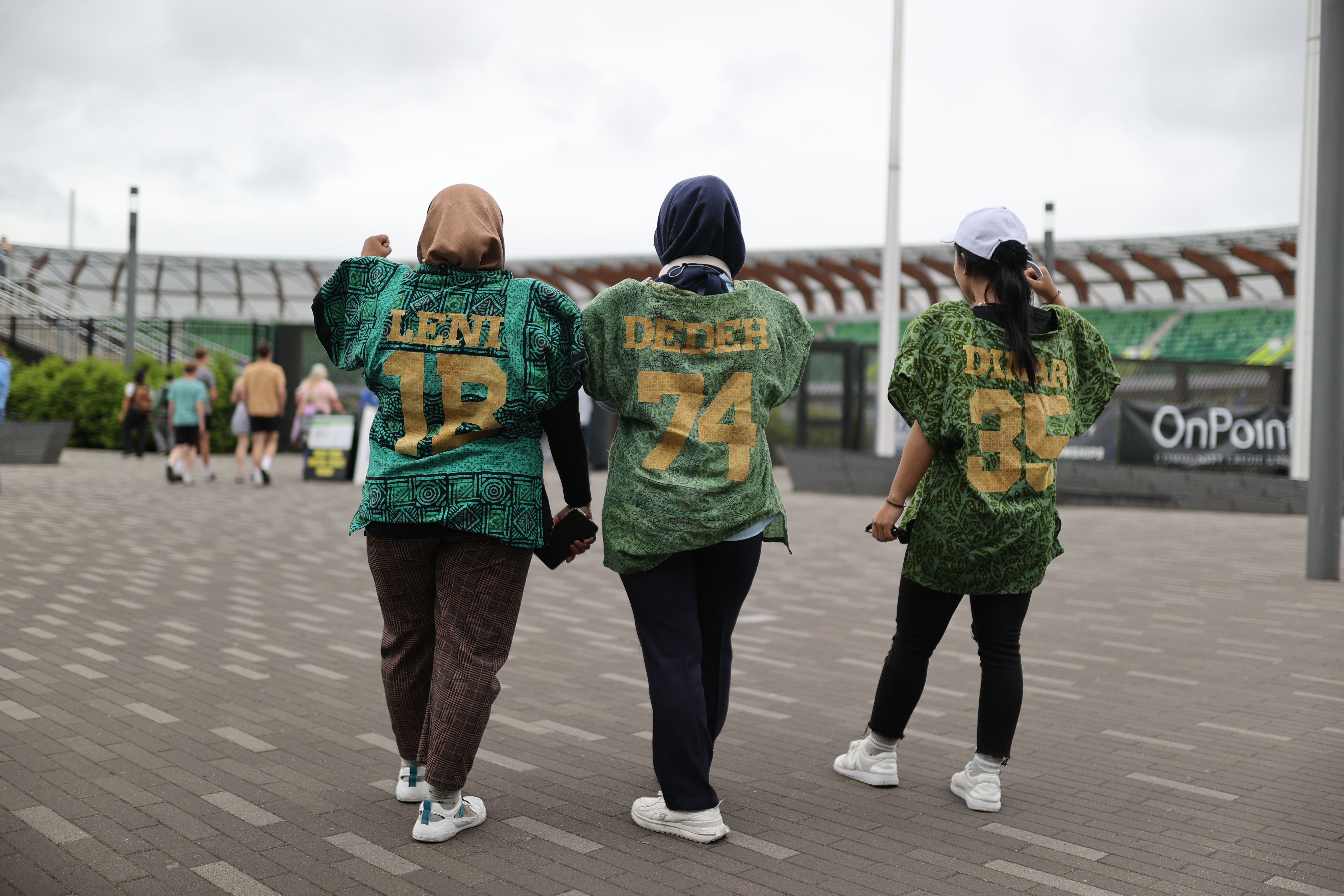
As athletes competed in the OSAA State Track & Field Championships inside Hayward Field, a powerful act of protest unfolded just outside. Three Indonesian garment workers—Dedeh, Dinar, and Leni—joined by allies, demanded that the Nike-funded stadium be renamed to “Hidup Buruh” - meaning: “Long Live the Workers!” The symbolic action highlighted a jarring truth: while Nike co-founder Phil Knight funneled over $270 million into the stadium’s renovation during the pandemic, garment workers making Nike products saw their wages slashed.
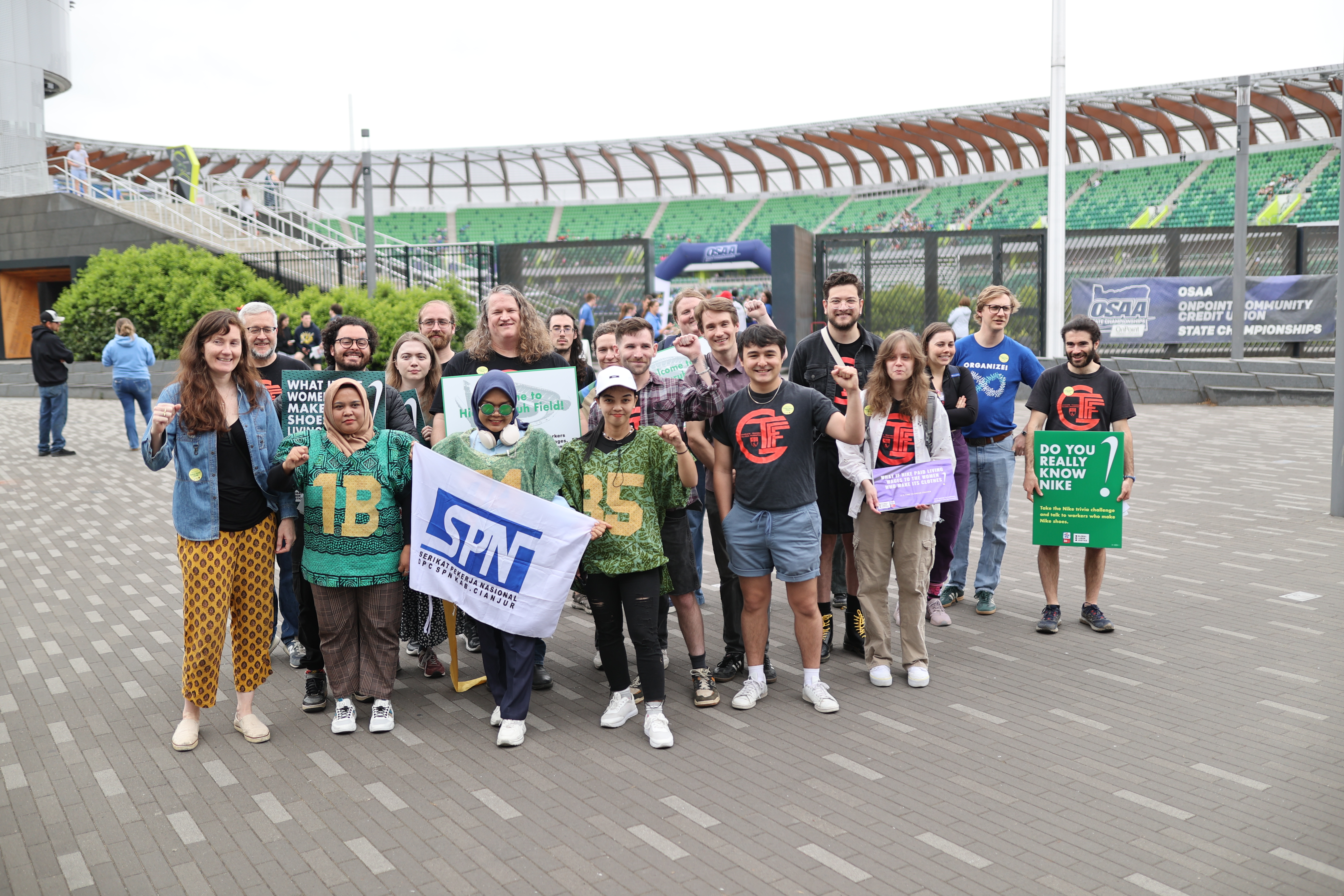
Leni Oktira Sari, a worker activist and Nike garment worker, says, “Rename Hayward Field. Rename it after us, the people who really made its renovation happen. In Indonesia, we are taking risks and fighting hard. When we are in the streets rallying and protesting injustice from brands like Nike, we have a unifying chant—‘Hidup Buruh!’ It means ‘long live the workers,’ and it lifts us up, the workers who make the world’s clothing, the workers behind Nike and other iconic fashion brands.” The chant echoed through the campus as worker activists and allies affirmed that the wealth behind the track was built on exploitation.
“We came to see the stadium that Nike built from the money from our wages that were cut during the pandemic,” - Leni.
“We’re here because the labor of the workers of Indonesia and Southeast Asia is actually what creates the profit to pay for Hayward Field and its renovations,” said Gonzalo Bustamante Moya, Vice President of Political Education for the Graduate Teaching Fellows Federation at the University of Oregon. “Long live the workers is not only a way for us to honor the actual labor that created the profits that paid for the stadium, but also to show that workers are indispensable for all the living that we take for granted... it is actually the labor of living people that deserve living wages and dignity that makes this world run.” Today's action made one thing clear: the fight for wage justice doesn’t stop at factory gates—it follows the money, all the way to the stadiums built on stolen wages.
Stay tuned for more updates and read: Day Three Of The Worker Action Delegation | Garment Workers Bring The Fight To Nike’s Headquarters
Day Three Of The Worker Action Delegation | Garment Workers Bring The Fight To Nike's Headquarters
May 28, 2025
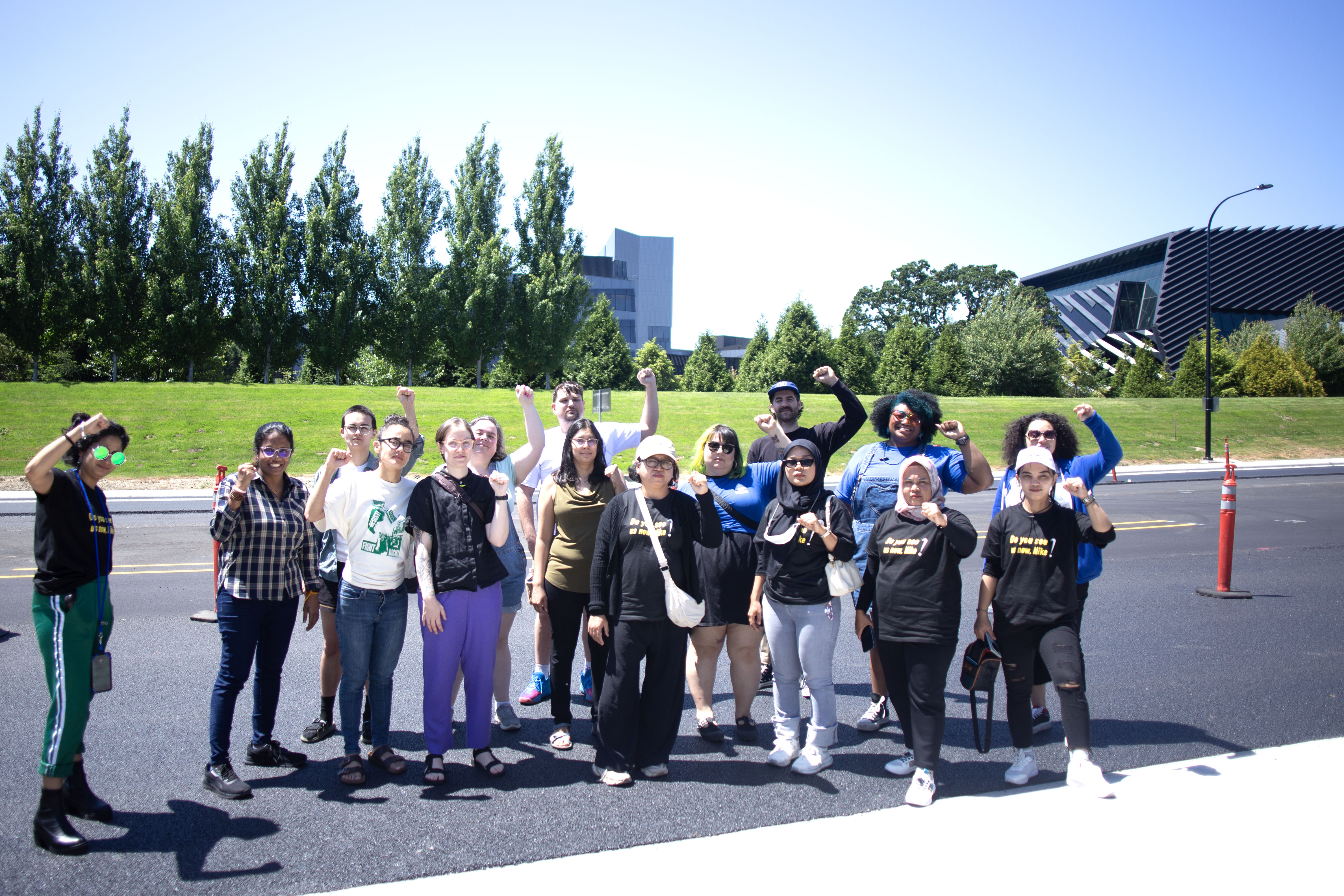
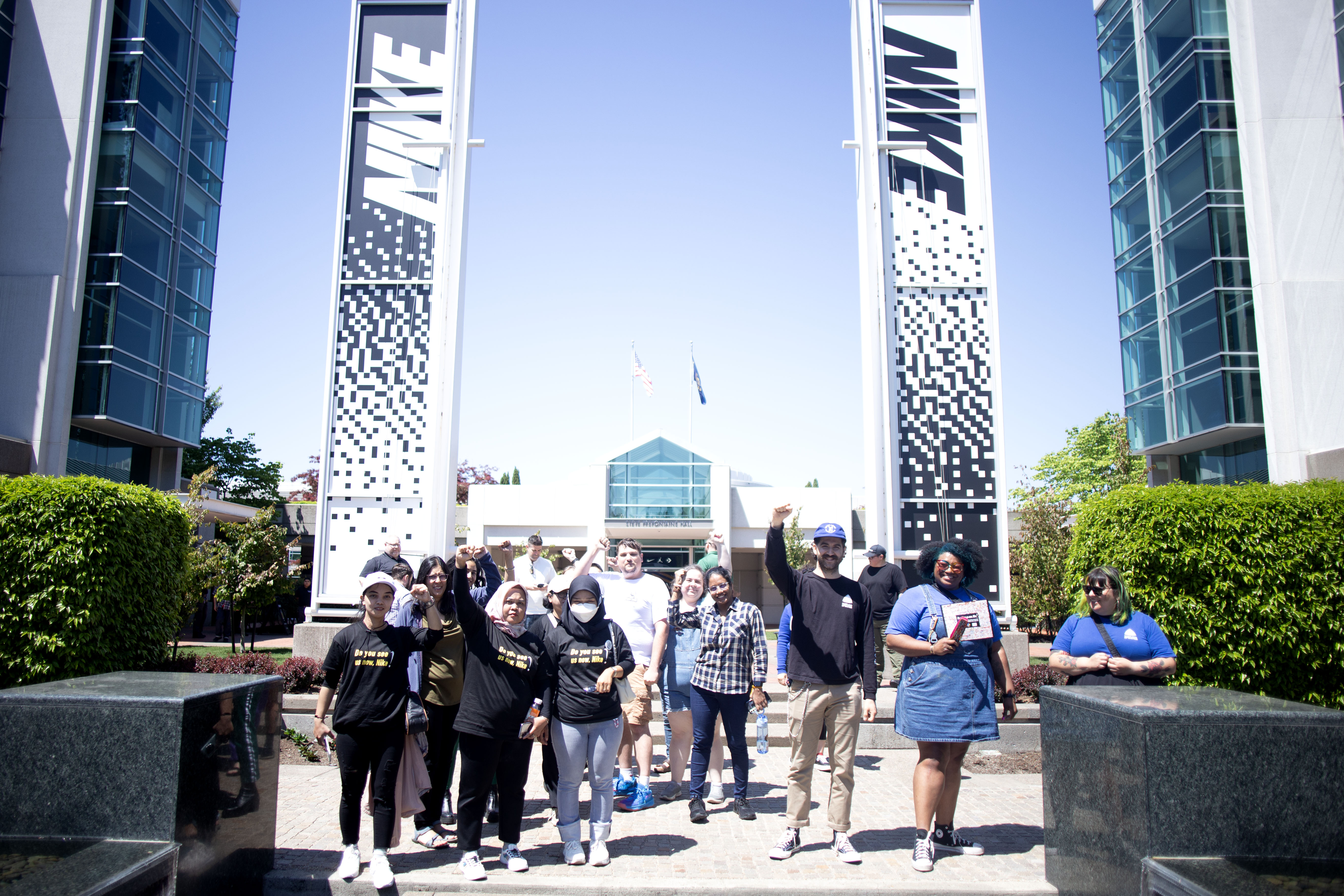
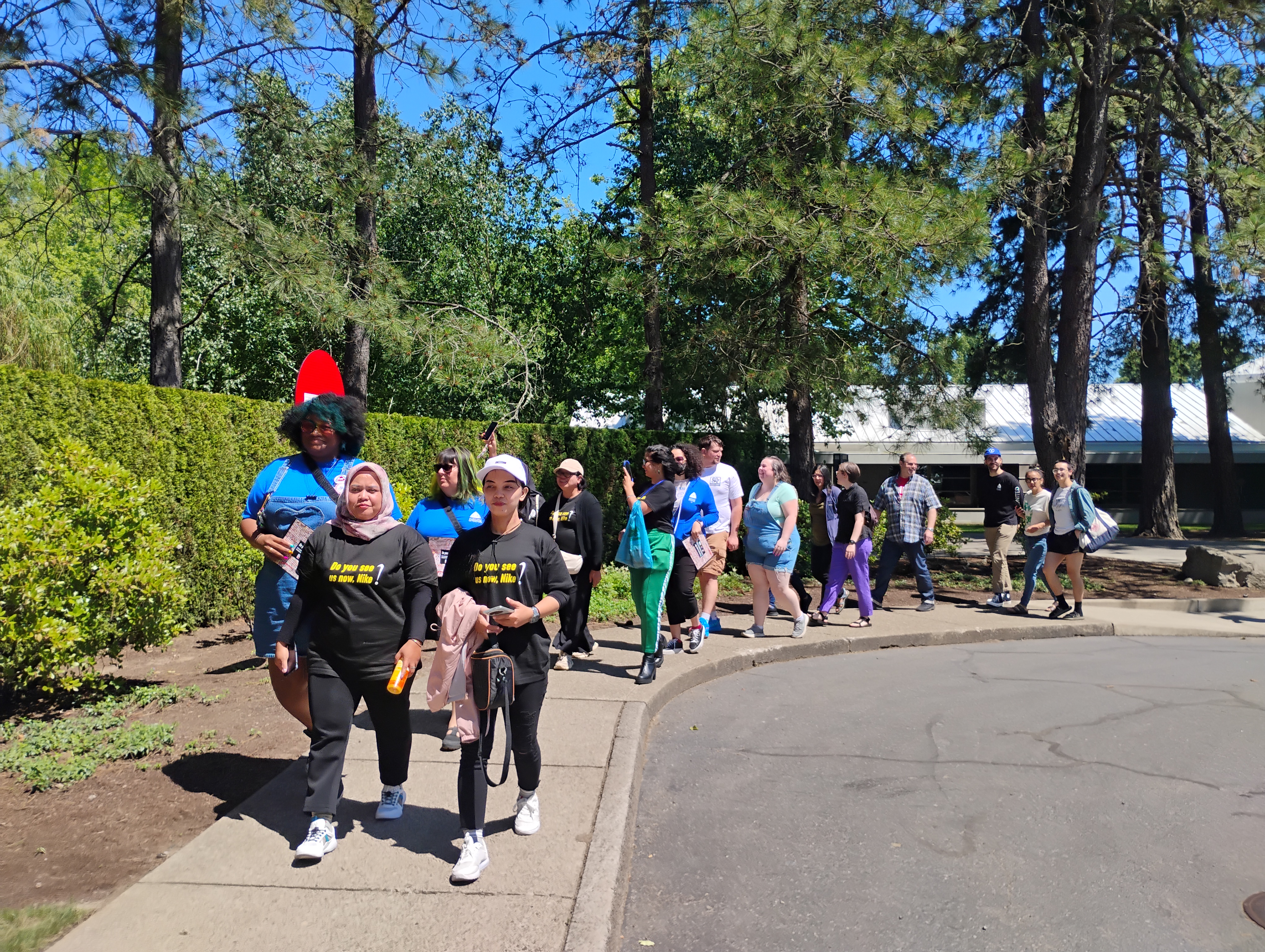 On Wednesday morning, Indonesian garment worker activists Dedeh, Dinar, and Leni—joined by allies, including the Portland Association of Teachers—rallied at Nike’s global headquarters in Beaverton. They had come 7,000 miles to confront the brand that profits off their labor but refuses to acknowledge their demands. At the headquarters, the workers carried a simple message: if Nike can afford billion-dollar profits, it can afford to pay the women who make its shoes.
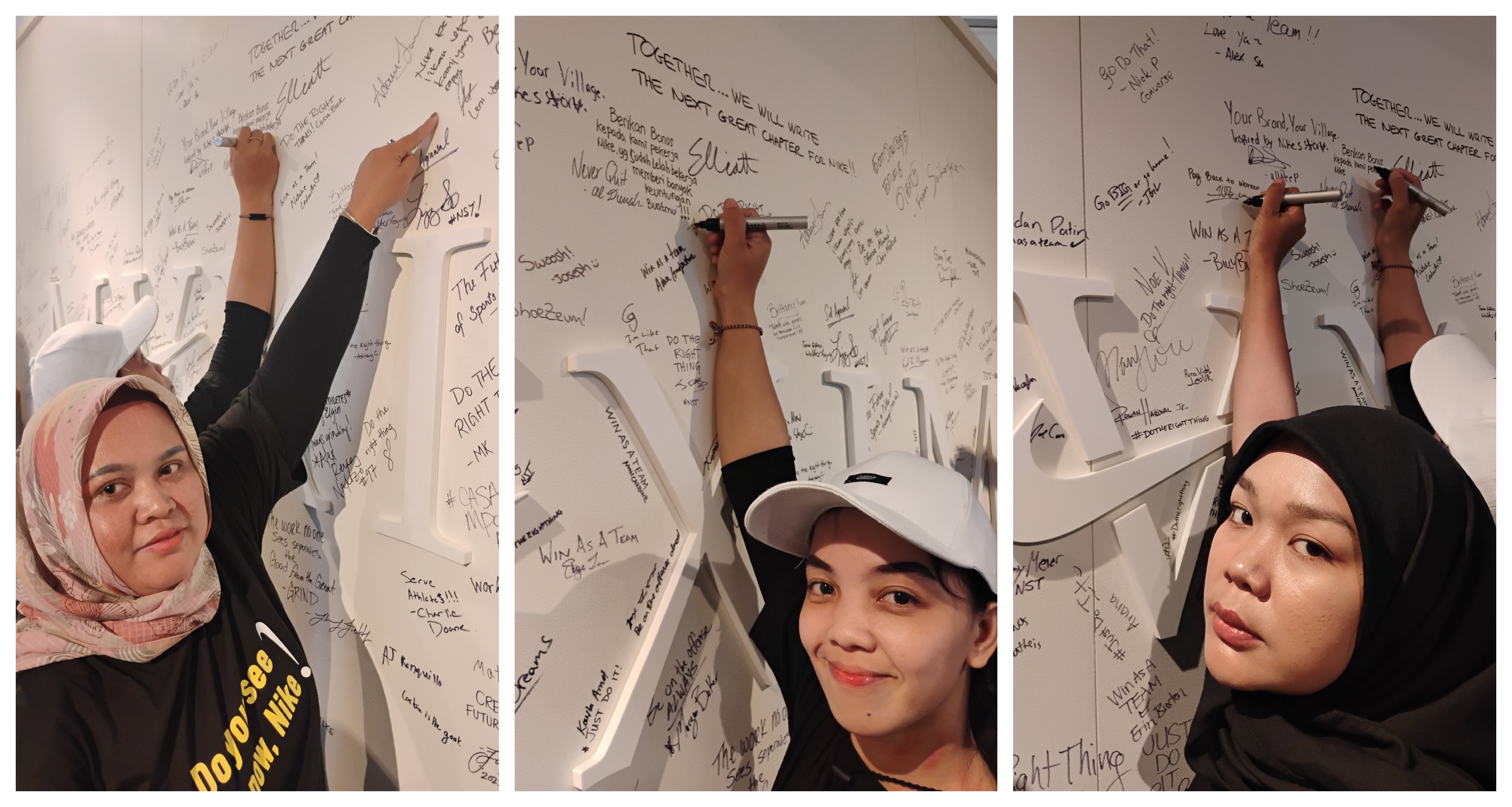 The workers attempted to speak with Nike employees directly, but were told they had no approval to be on “private property.” When security arrived to remove them, the three women did not back down. Instead, they calmly explained why they were there. They spoke about how they had their wages stolen from them while Nike’s profits soared and spoke about being laid off during the pandemic. “Our work makes Nike billions so we came 7000 miles to tell Nike executives to pay us what we deserve. They were so afraid of three women from Indonesia telling the truth that they sent security to kick us off their ‘private property’ and told us it was ‘only for Nike employees.’ Now we know how much power we can have,” said Dedeh.
Refusing to be silenced, the workers and their allies continued their protest just outside the headquarters. They stood their ground and raised their voices through slogans. They made sure everyone—from employees to passersby—heard the truth. The rally at Nike HQ was a declaration: garment workers are not invisible, and they will not be turned away quietly.
Stay tuned for more updates and read: Day Two Of The Worker Action Delegation | Confronting Nike, Building Power
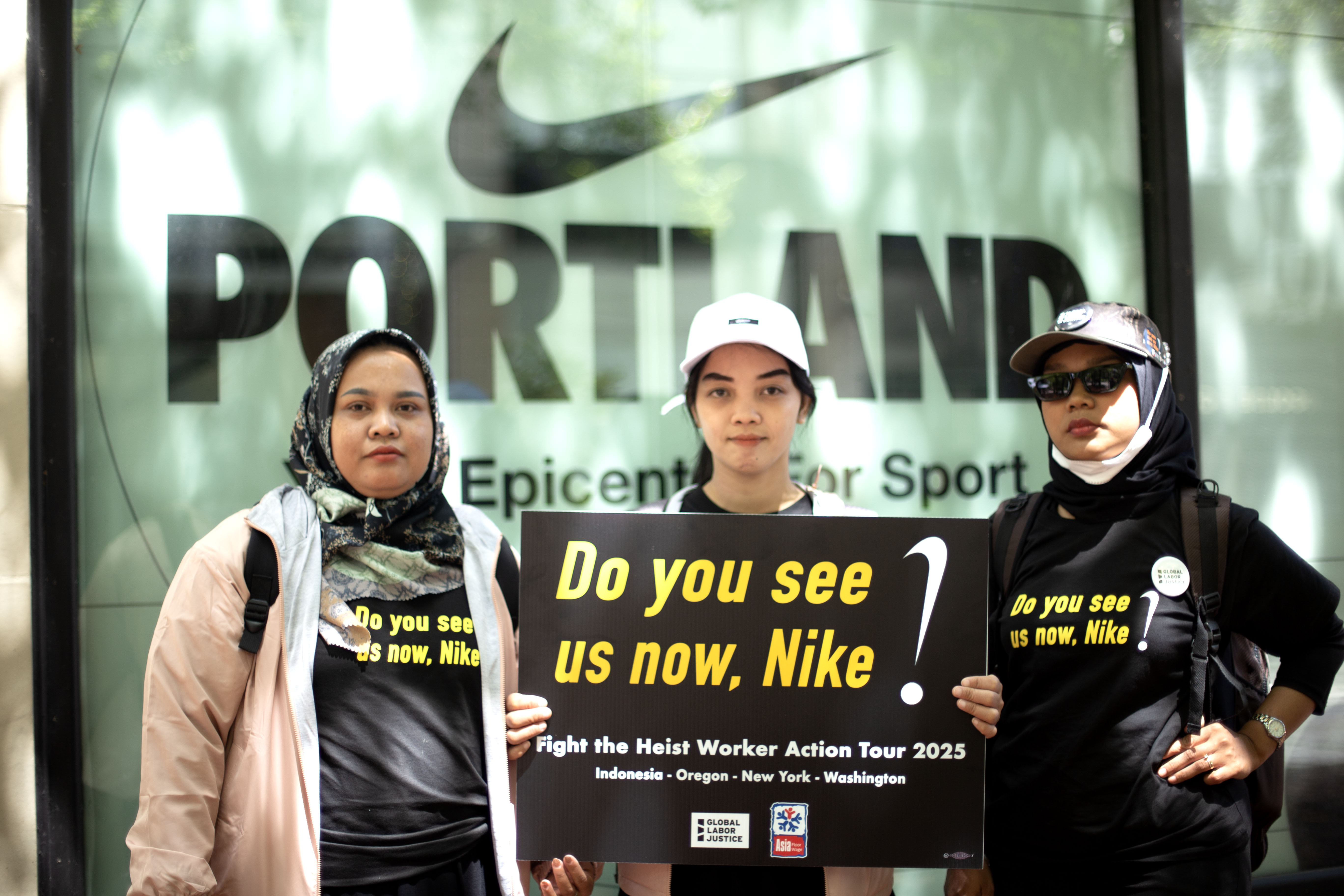
Day Two Of The Worker Action Delegation | Confronting Nike, Building Power
May 27, 2025
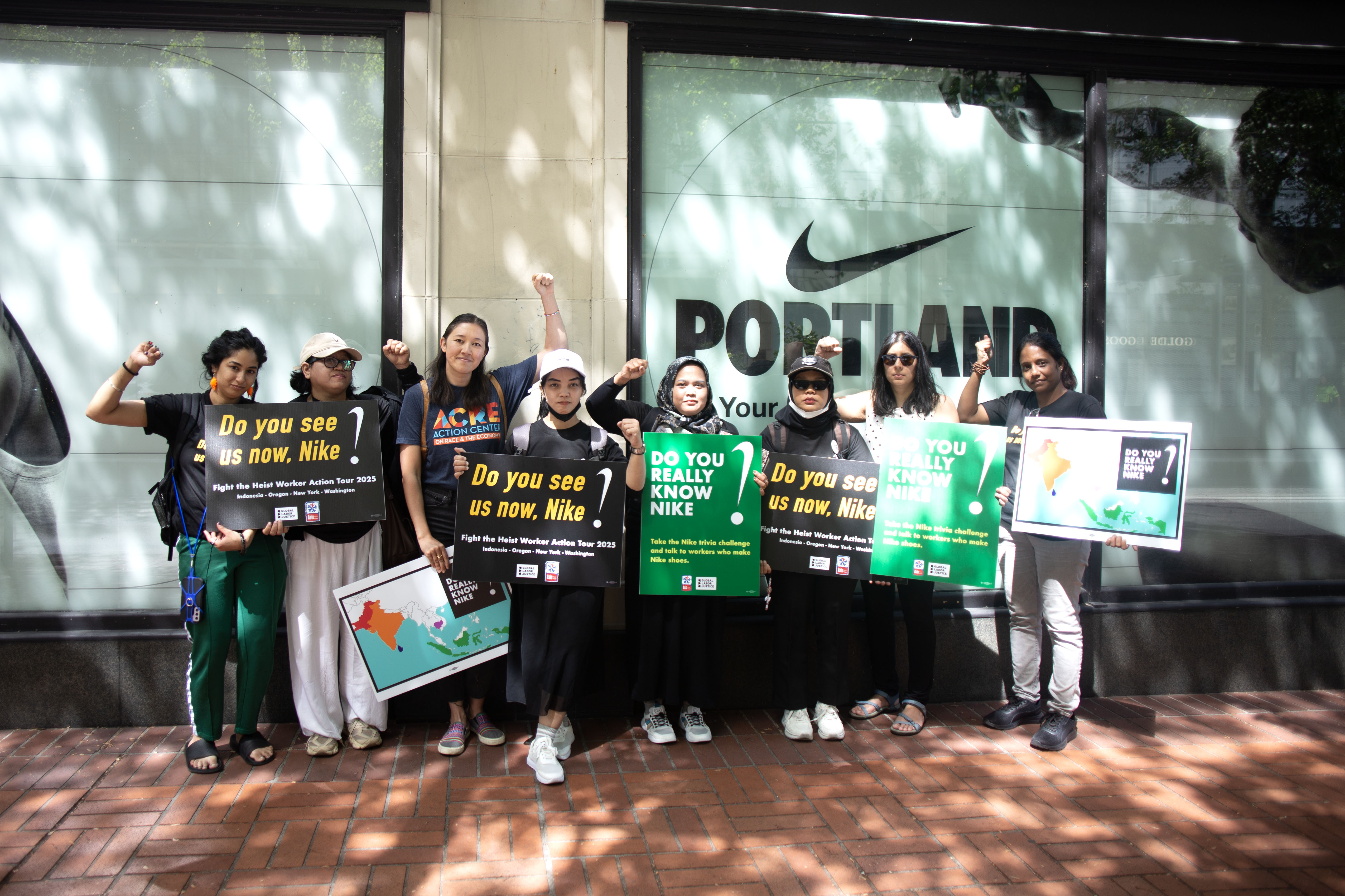
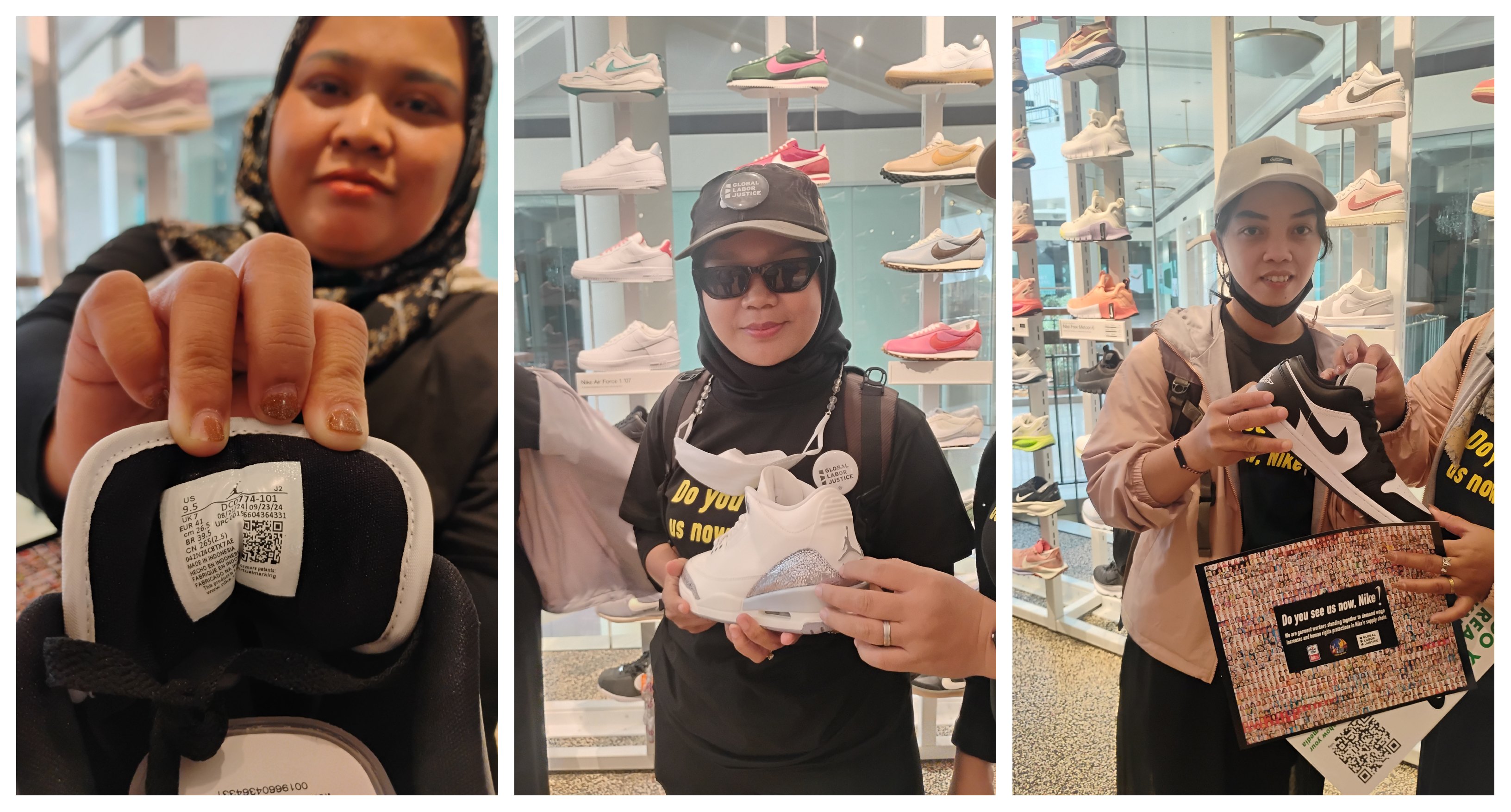
Today, Dedeh, Dinar and Leni went with allies from Jobs with Justice and Action Center on Race in the Economy (ACRE) to the Nike Store in downtown Portland. The workers found the shoes they make in Indonesia and were shocked to find some had retail prices equal to more than their monthly wages. After store representatives asked them to leave, the workers and allies engaged with customers, asking how well they really know Nike and shared the story of their fight.
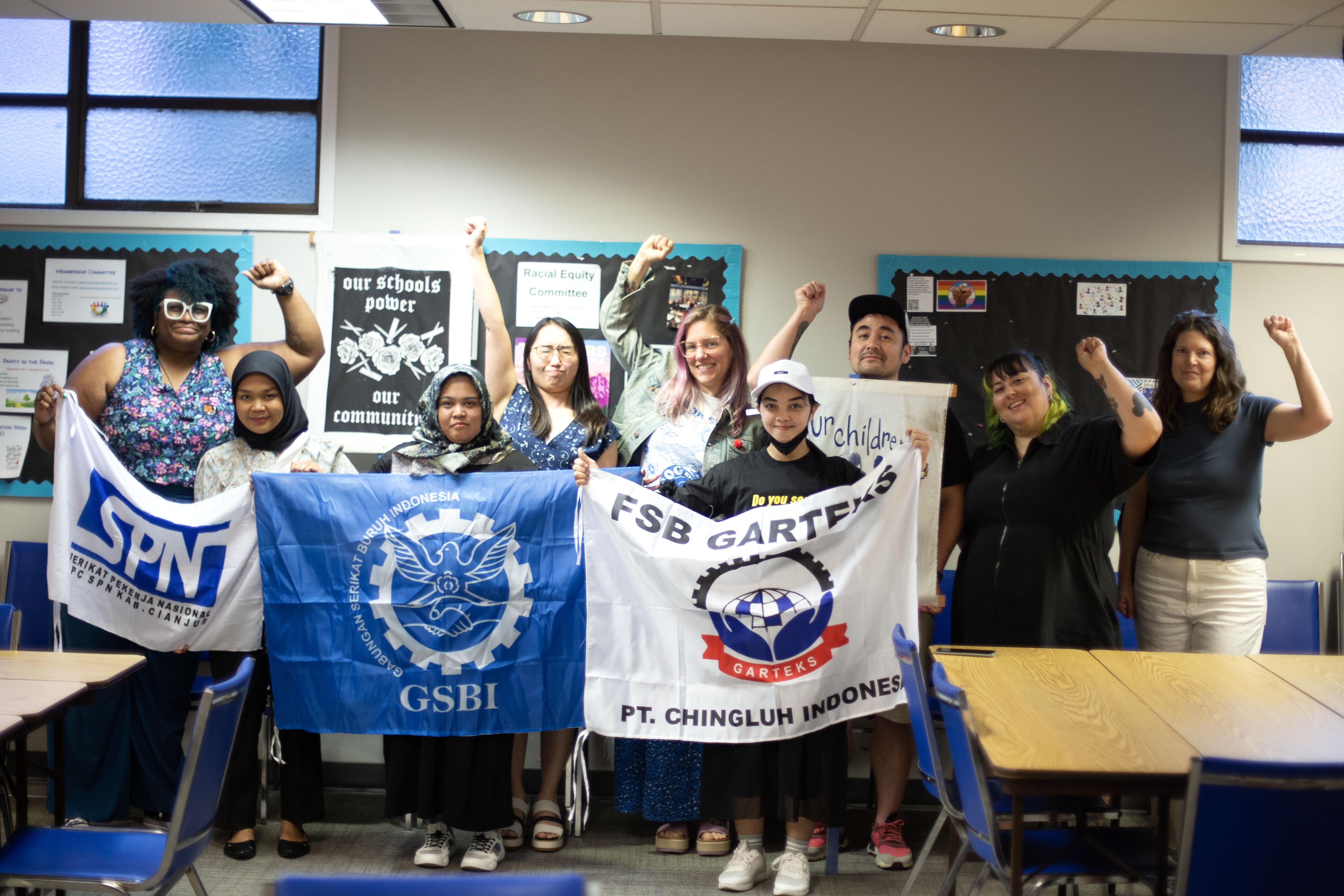
In the evening, the delegation met with labor and social movement allies from across Oregon at a dinner and meeting hosted by the Portland Association of Teachers. The teachers’ union president Angela Bonilla opened the meeting and connected Nike supply chain workers’ campaign to the fights of teachers and immigrant workers in the US. The workers gave powerful speeches, and the night ended with a conversation about how Oregon allies can bring pressure for the workers’ demands directly to Nike.
Stay tuned for more updates and read more about the delegation here: Day One Of The Worker Action Delegation | Nike Workers Arrive At Nike’s Doorstep