May Day 2026: United Against Low Wages, Insecurity and Repression
May Day 2026 took place amid growing pressure on workers and unions across Asia. Rising living costs, insecure employment, and restrictions on freedom of association continued to threaten workers’ rights and living standards. These pressures intensified amid the conflict and rising costs of fuel. Higher energy and freight costs increased prices for cooking gas, fuel and transport, while placing further pressure on cost of daily necessities, production and employment across supply chains.
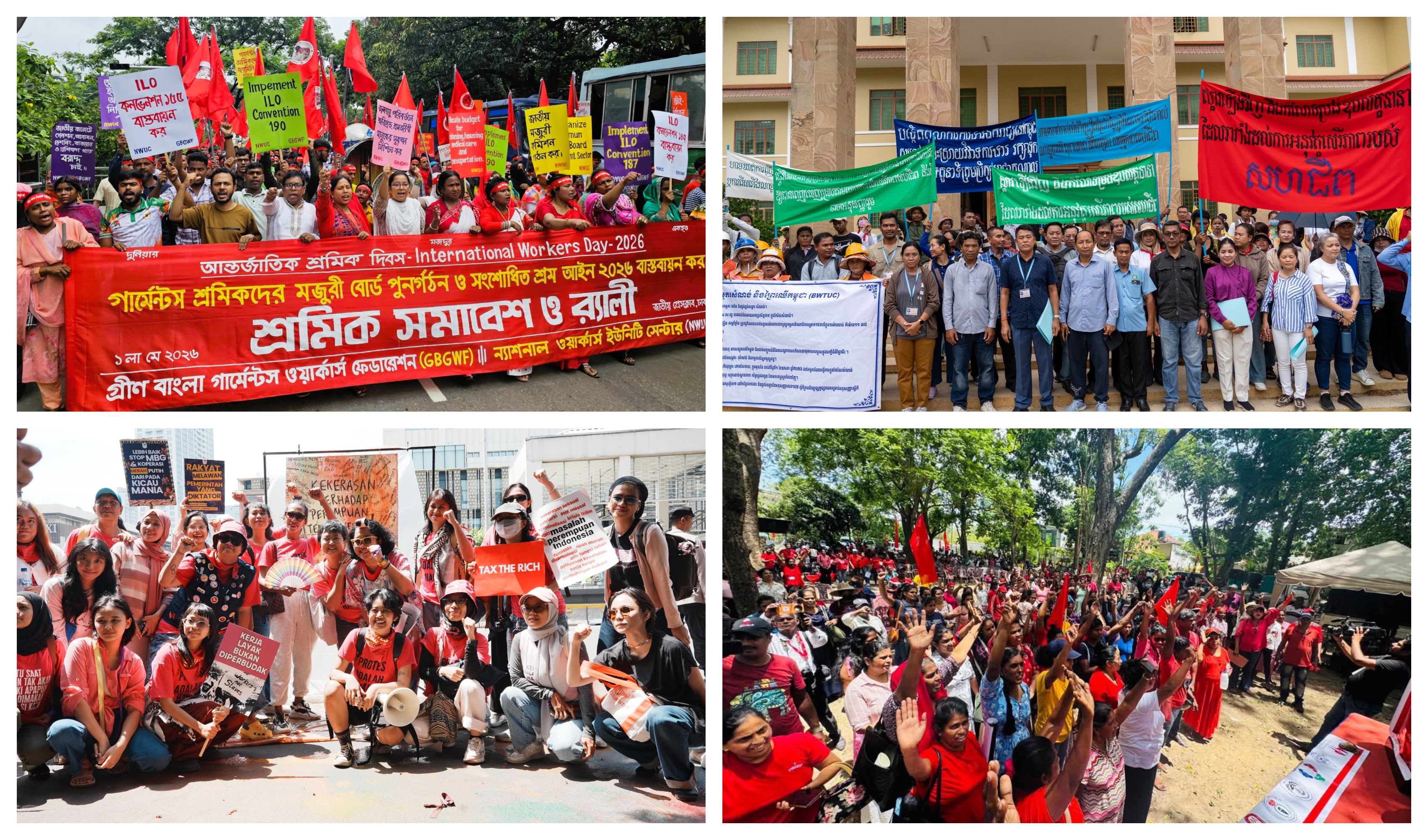
Across Bangladesh, Cambodia, India, Indonesia, Pakistan and Sri Lanka, workers and trade unions marked International Workers’ Day through rallies, assemblies, petitions and demonstrations. Responding to different national conditions, workers with their unions advanced a common set of priorities: living wages, social protection, safe and dignified work, freedom of association and a meaningful voice in the laws and policies governing their lives.
Bangladesh: Garment workers called for wage reform and trade union rights
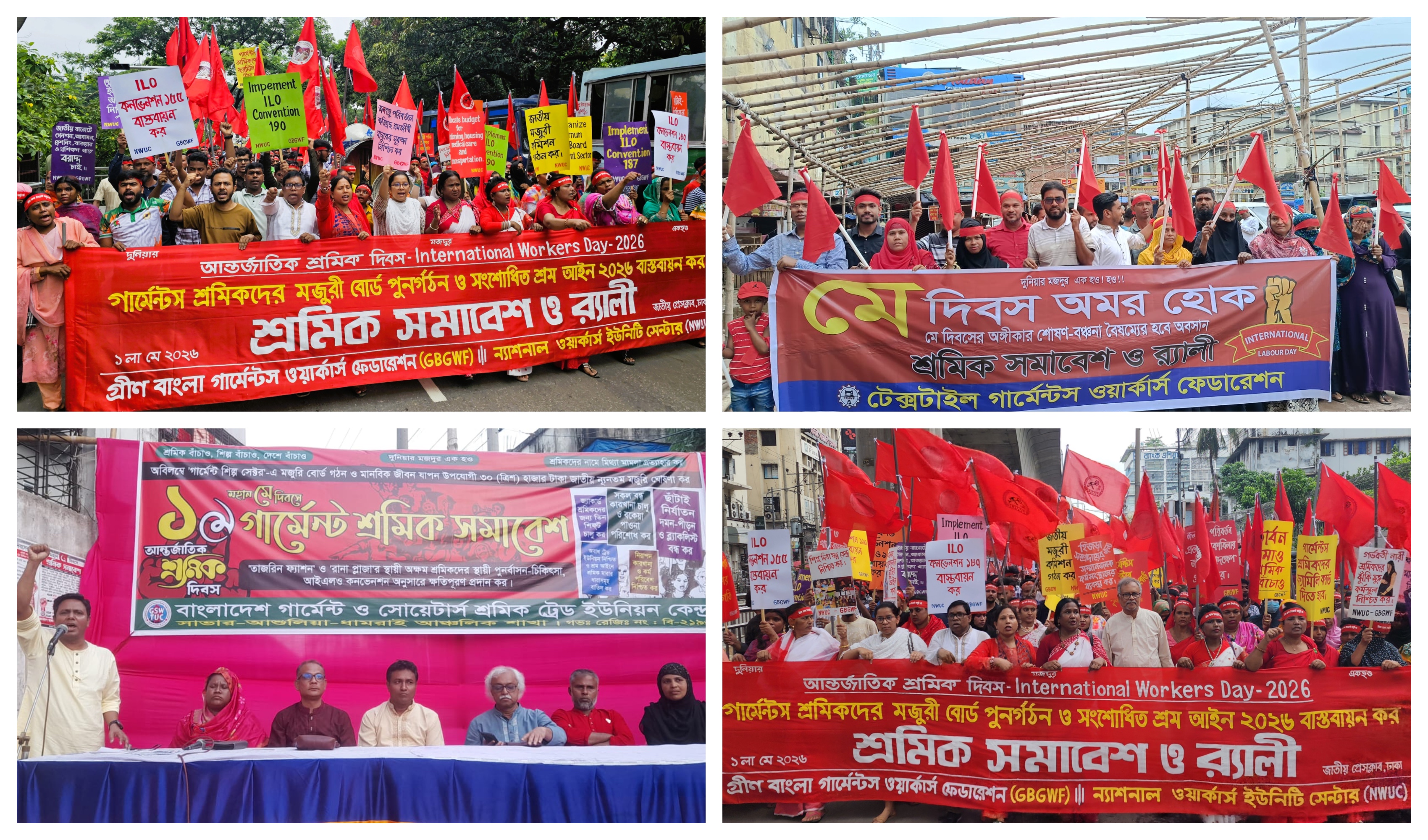
Garment workers gathered across Dhaka, Gazipur and Ashulia to demand fair wages, safe working conditions and stronger labour protections.
In front of the National Press Club, the Green Bangla Garments Workers Federation and the National Workers Unity Center jointly organised a workers’ assembly and rally. Participants called for the reconstitution of the wage board, implementation of a living wage, and enforcement of the amended Labour Law 2026.
They also demanded maternity protection and childcare facilities, social protection, respect for freedom of association, worker representation in safety committees, the reopening of closed factories, and the implementation of ILO Convention 190 after its ratification in November 2025. The programme concluded with a rally through key points in the city.
At Gazipur Chowrasta, the Textile Garments Workers Federation called for the immediate formation of a minimum wage board, six months of maternity leave, the introduction of a worker identification card modelled on the family card system – which registers households for access to subsidised necessities and social benefits, an end to illegal layoffs and the withdrawal of false cases against workers.
In Nischintapur, Ashulia, the Bangladesh Garment and Sweaters Workers Trade Union Centre organised an assembly in front of Tazreen Garments. Factory workers joined injured workers, families of deceased workers and trade union leaders in demanding fair wages, a dignified standard of living, safe working conditions and freedom of association.
The assembly called for a separate garment-sector wage board, a national minimum wage of BDT 30,000, payment of outstanding dues, and the reopening of closed factories. Representatives of victims of the Tazreen and Rana Plaza tragedies demanded proper compensation, long-term rehabilitation and stronger workplace safety measures.
Cambodia: Thirty-six Unions and Allies Unite to Demand Freedom of Association
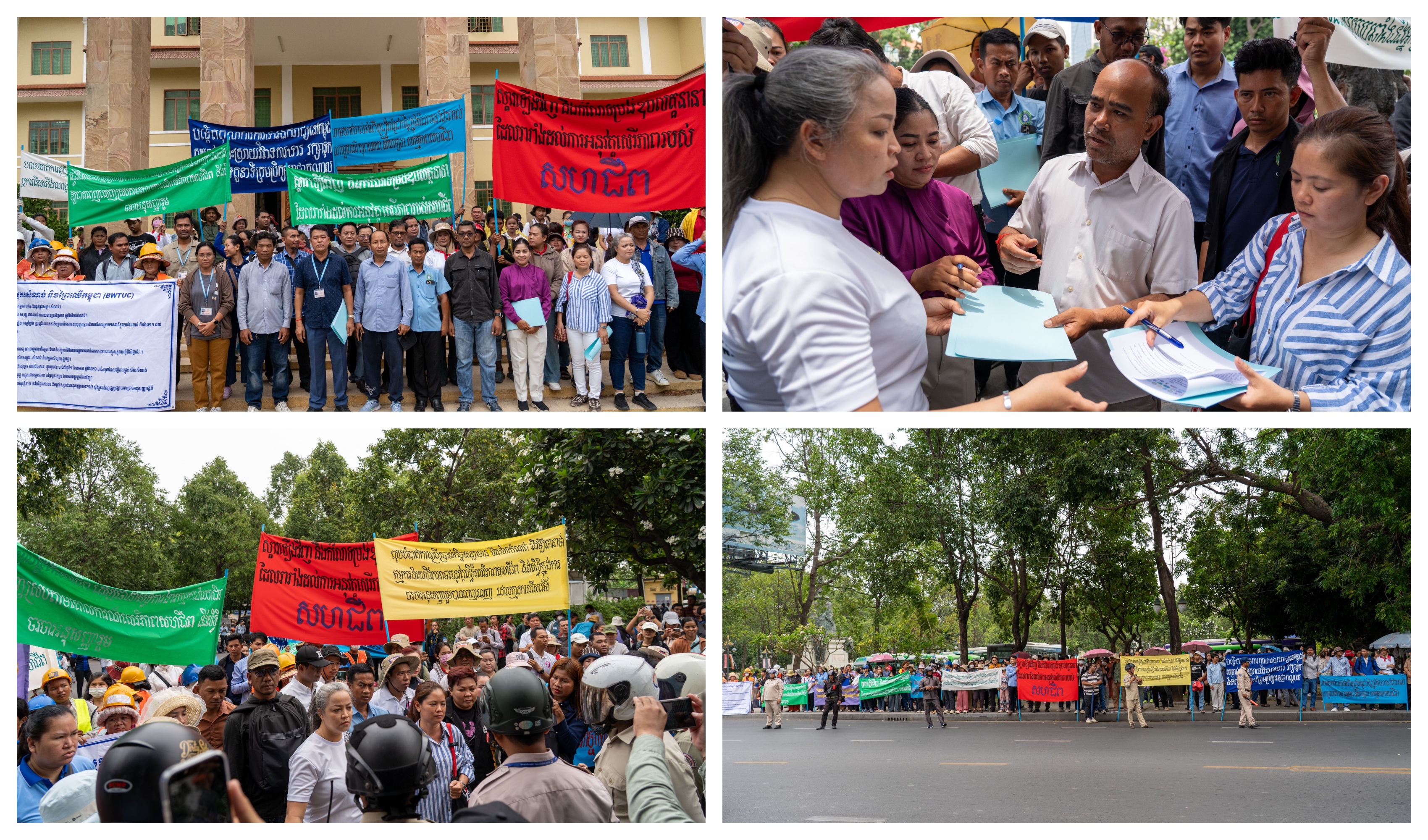
In Phnom Penh, independent trade unions, labour federations and civil society organisations called on the Royal Government of Cambodia and global brands to enable and protect the right to freedom of association. Around 36 unions and labour allies endorsed a joint May Day petition developed collectively by unions and civil society organisations. The initiative strengthened coordination among independent unions and labour rights organisations while amplifying workers’ demands for freedom of association, collective bargaining, labour rights protections and decent work amid continuing economic and trade pressures.
India: Workers and their Unions Led Rallies and Outreach Activities
In Karnataka, the Karnataka Garment Workers Union (KOOGU), Karnataka State Garment and Textile Workers Union (KSGATWU) and the United Union of Garment Workers (UGW) participated in the May Day program organised by the Joint Committee of Trade Unions (JCTU). Around 400 workers from the three unions marched from Town Hall to Freedom Park in Bangalore, where the rally was followed by a public meeting organised by the JCTU. Workers and union leaders demanded the withdrawal of the four Labour Codes, immediate implementation of the revised minimum wages proposed in the draft notification issued on 14 April 2025, and social security and welfare protections for workers in the unorganised sector.
In Tirupur, Tamil Nadu, a month-long awareness and outreach campaign reached local and migrant women garment workers in surrounding villages. The campaign addressed poverty-level wages, insecure employment, unsafe workplaces, and the repression of worker rights. It called for living wages; periodic revision of minimum wages and annual increases in Dearness Allowances; safe workplaces free from gender-based violence and harassment, and discrimination; regular working hours and legally mandated double overtime wages; job security and an end to forced resignations; universal access to Employees’ State Insurance, Provident Fund and other statutory entitlements; recognition of workers’ right to organise and form unions within factories; and greater accountability from factory management and global brands.
Indonesia: Labour Movements advanced Different Visions of May Day
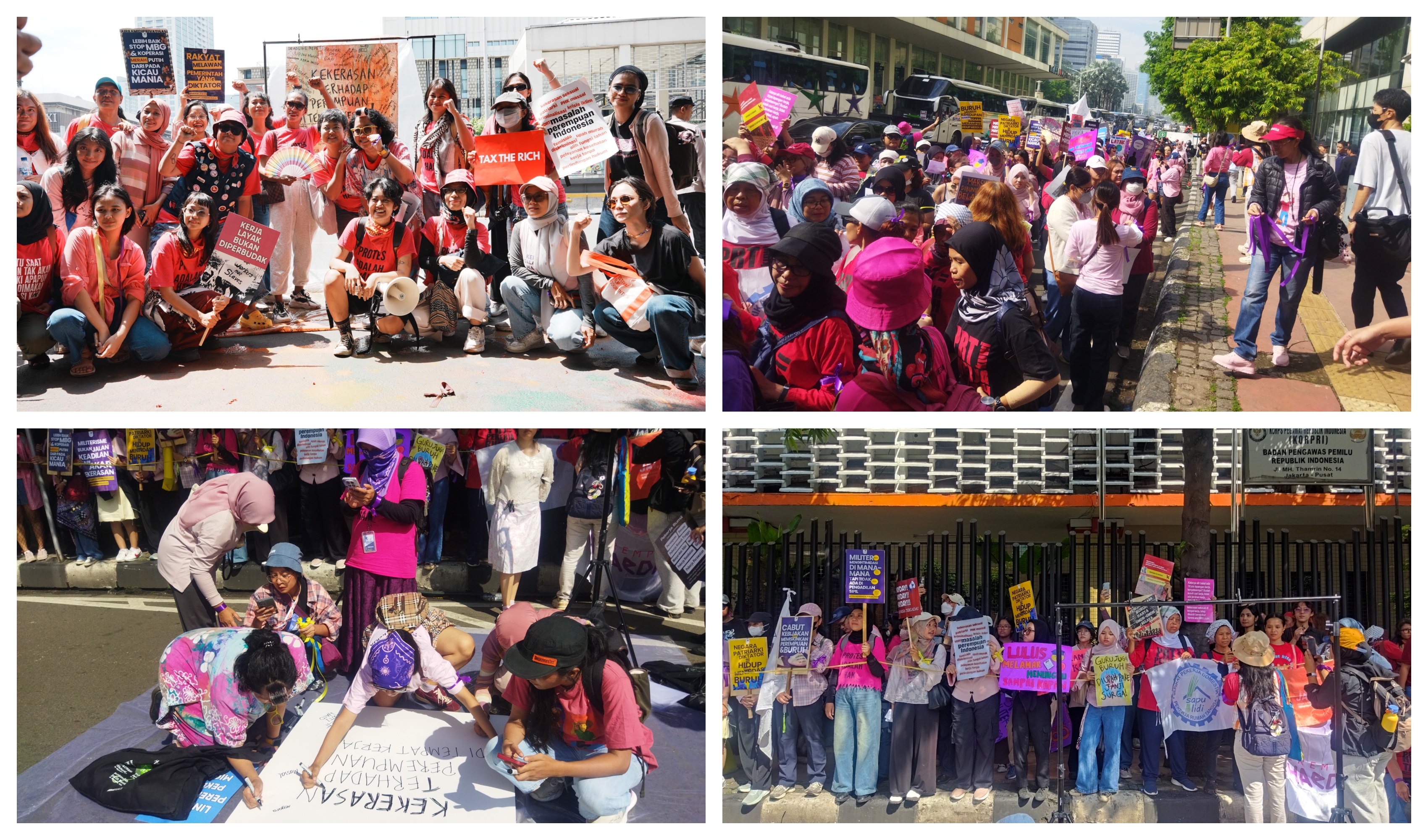 Across Indonesia, workers marked May Day with demonstrations, marches, and public gatherings in cities and industrial areas. Jakarta was a major center of mobilisation, with activities held at least four locations. Estimates for the largest gathering at the National Monument ranged from about 200,000 to 400,000 participants, while thousands more joined demonstrations and smaller gatherings elsewhere in the capital.
A large May Day celebration, involving the government and union confederations, took place at the National Monument. During the “May Day Fiesta,” union leaders shared the stage with President Prabowo Subianto. The program combined speeches and entertainment with discussions of workers’ concerns - including mass layoffs, outsourcing, affordable housing, childcare, and protections for domestic, online transportation and fishing-sector workers. The government also announced several labour-related laws, regulations and welfare measures.
Elsewhere in Jakarta, Gerakan Buruh Bersama Rakyat (GEBRAK, the Labour Movement Together with the People) and Persatuan Rakyat Anti-Imperialisme (PERISAI, the People’s Anti-Imperialist Alliance) demonstrated outside the House of Representatives. They called for living wages, an end to outsourcing and insecure employment, protection against mass layoffs, freedom of association and a pro-worker labour law developed with meaningful union participation. They mass linked these workplace concerns to broader demands for public services, agrarian reform, and democratic freedoms, while opposing militarism and the criminalisation of activists and expressing solidarity with oppressed people worldwide.
The Aliansi Perempuan Indonesia (API, Indonesian Women’s Alliance) organised a separate action under the banner “Democracy on the Brink: Women Workers Sue the State.” Around 300 participants marched along Jalan M.H. Thamrin toward the Election Supervisory Agency. They called for a living wage, freedom of association, universal social protection, affordable childcare, an end to workplace militarisation and mass layoffs, and ratification of ILO Convention 190 on violence and harassment in the world of work.
Another gathering near Tugu Tani highlighted the rights and experiences of workers with disabilities. May Day activities also took place in Bandung, Surabaya, and other cities and industrial areas. These mobilisations reflected local conditions and priorities while advancing common demands for living wages, secure employment, social protection and respect for workers’ rights.
Pakistan: Workers Demand Wages that Reflected the Cost of Living
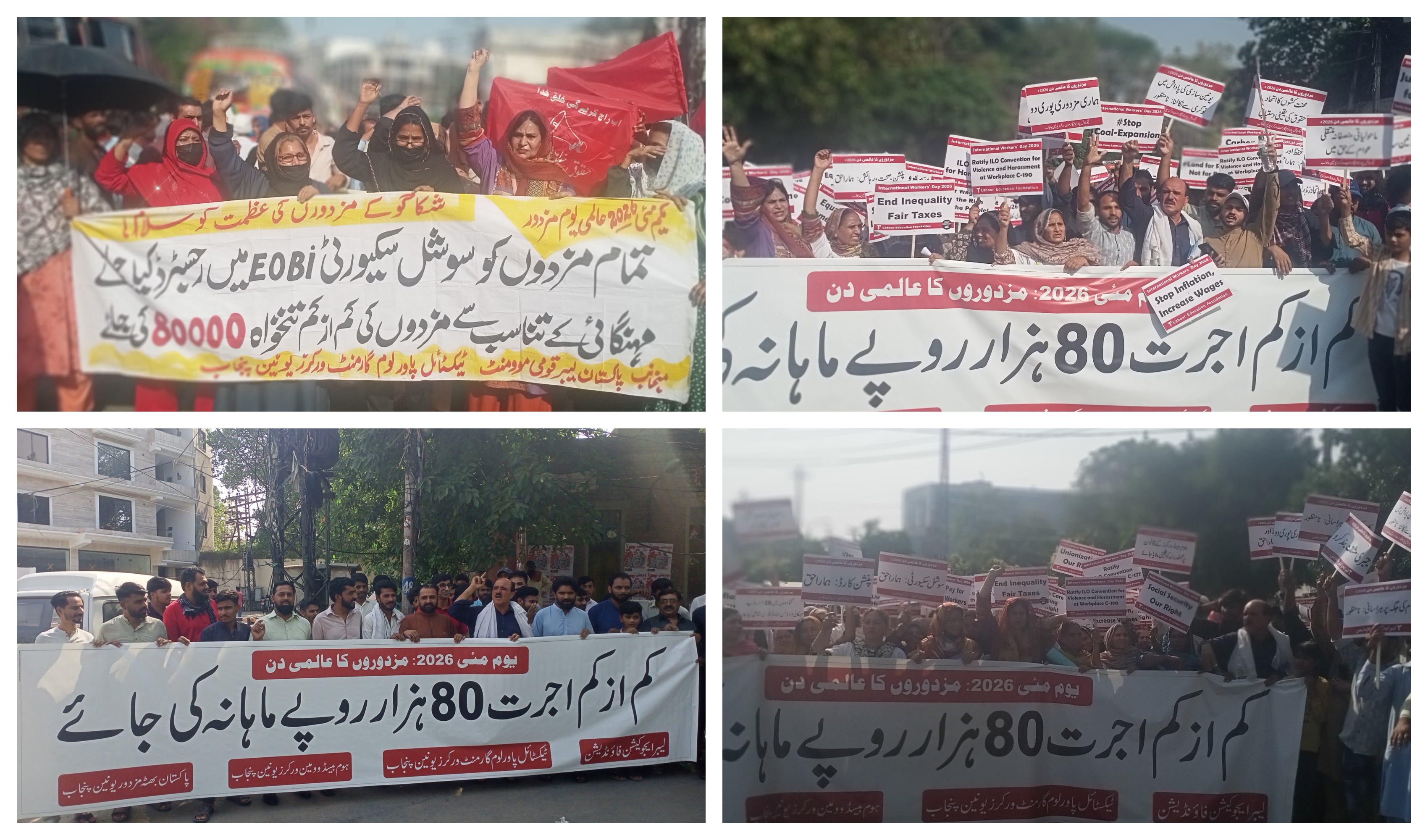 In Lahore, thousands of garment, brick-kiln and home-based workers marched from Shimla Pahari to the Press Club. Workers travelled from Lahore, Faisalabad, Karachi, Multan and Rawalpindi, with women workers from Faisalabad participating in significant numbers.
Led by AFWA partner unions, including the Textile Power-loom Garment Workers Union, the rally demanded that the monthly minimum wage be increased to Rs 80,000. Workers also called for a regular inflation allowance as the costs of food, housing and transport continued to rise faster than wages.
The Pakistan Textile Workers Federation presented a wider set of demands to the federal and provincial governments. These included universal social security, old-age pensions equal to the minimum wage, faster processing of scholarships, marriage and death grants and consistent implementation of the workers’ ration card scheme.
The Federation rejected the Punjab Labour Code Bill in its existing form and called for the withdrawal of restrictive labour codes, lower fuel prices and the reversal of unjustified increases in electricity and gas tariffs. Trade union leaders also warned that geopolitical tensions, changing tariffs and unstable export orders could deepen insecurity in Pakistan’s garment industry, with workers bearing the consequences.
The rally concluded with a collective commitment to continue organising around wages, social protection and safe and respectful working conditions.
Sri Lanka: Workers Rallied for Social Protection and Labour Law Reform
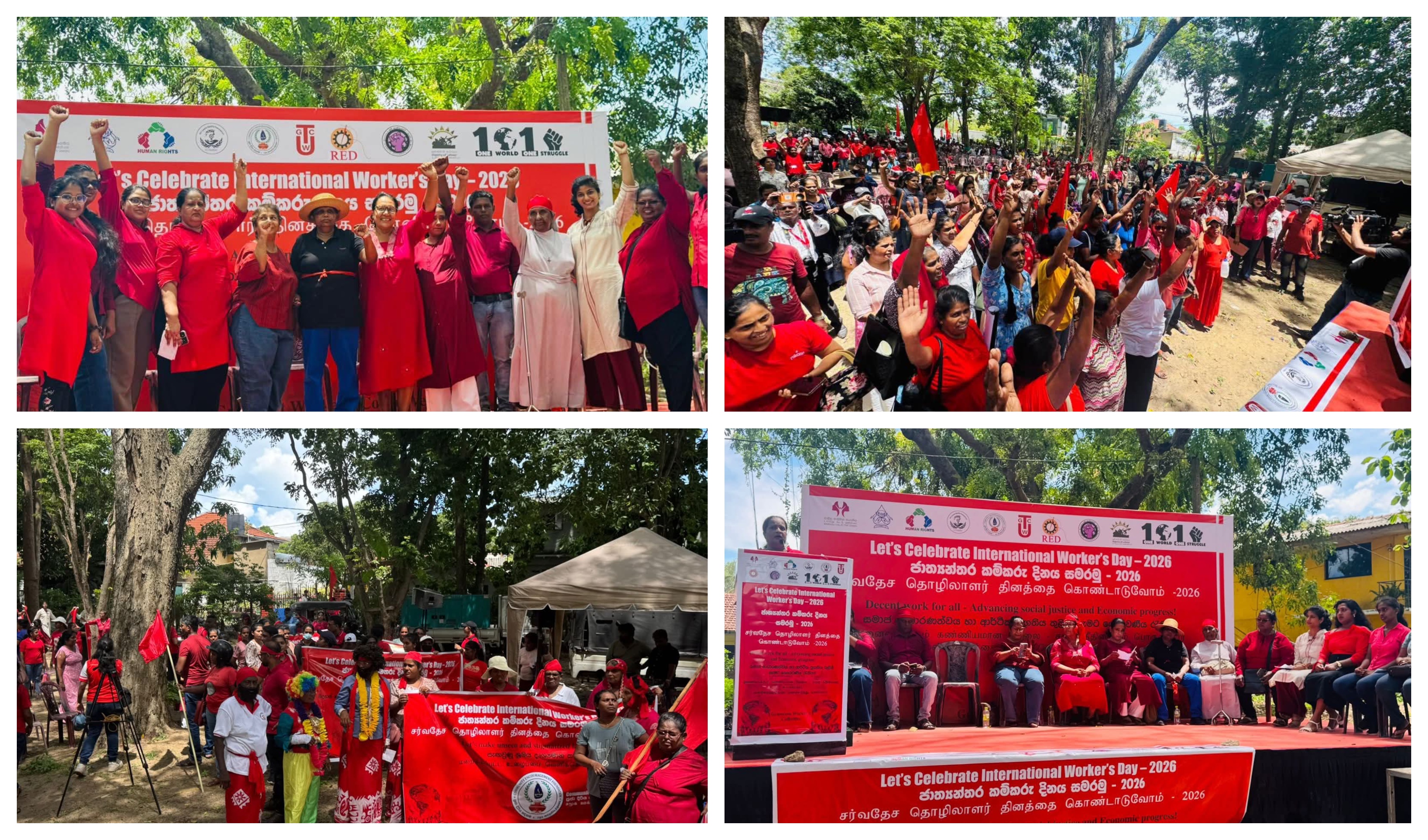 In Katunayake, between 300 and 400 people joined a workers’ rally and bike parade organised by Dabindu Collective Union. The procession began at the 18th Mile Post bus halt and continued to a nearby ground, where workers participated in speeches and street plays.
Dabindu was joined by Shramabhimani Kendraya, Revolutionary Existence for Human Development (RED), Textile Garment and Clothing Workers Union (TGCWU), We Women Lanka, the Community Encouragement Foundation, the Sri Vimukthi Fisheries Foundation, Puravasi Kamituva Human Rights Aid Center, the Sri Lanka Equity Foundation and activists.
Participants demanded labour law reform, social security, land rights, maternity benefits and recognition of the rights of care workers. They also called for a five-day working week and the implementation of ILO Convention 190 on violence and harassment in the world of work after it was ratified in January 2026.
The rally brought these demands into public view while strengthening coordination among trade unions, workers’ organisations and civil society groups.
Building Worker Power Across Borders
The 2026 May Day actions grew from different, yet linked, political and economic conditions affecting workers’ lives. In Bangladesh, workers demanded wage reform, trade union rights and accountability for industrial disasters. In Cambodia, unions and labour allies endorsed a joint petition demanding protection for freedom of association. In India, workers and their unions mobilised against the four Labour Codes and demanded living wages, social security and GBVH-free workplaces. May Day mobilisations across Indonesia highlighted the diversity of Indonesia’s labour movement and brought workers’ economic, social and democratic demands into public view. Workers in Pakistan demanded wages capable of meeting the rising cost of living. Sri Lankan organisations connected labour law reform with social protection, care work and freedom from violence and harassment.
Taken together, these actions demonstrated the importance of sustained organising, coordination among unions and alliances connecting workers’ immediate demands with wider struggles for economic and social justice. AFWA’s May Day 2026 statement connected these struggles to rising living costs, disrupted production and growing insecurity across garment-producing countries, while warning that global brands continue to shift risks onto suppliers and workers.
As May Day draws to a close, we reflect on the shared struggles that bind workers across Asia. From factory floors to mass demonstrations - the demands are the same: dignity, fair wages, safe working conditions and the right to organise. Those demands will be carried forward and strengthened by the solidarity that knows no borders.

The Ali Enterprises Factory Fire And Thirteen Years Of Impunity
Written by Sajid Ali
In August of 2012, the Ali Enterprises Textile factory in the Baldia district of Karachi, Pakistan was issued with a SA8000 certificate by Italian auditor RINA after an audit. The certification, purchased by the German brand KiK, confirmed that the factory was safe.
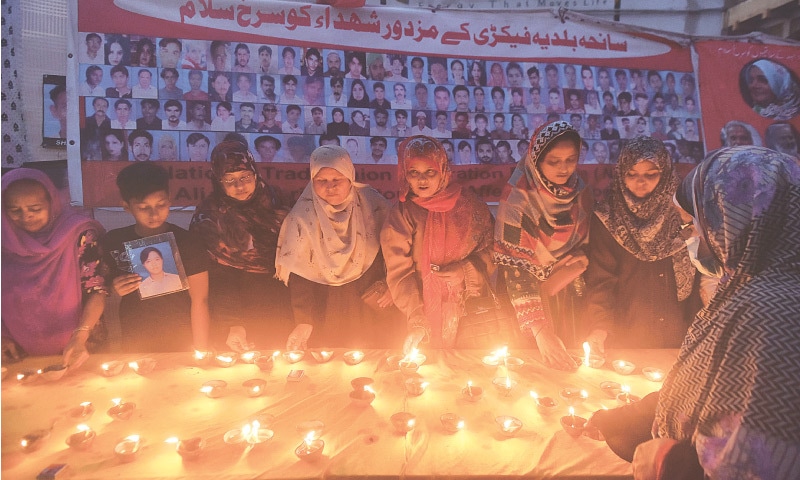
A few weeks later, a fire tore through the factory and claimed the lives of 260 workers.
On September 11, 2012, the fire at the Ali Enterprises garment factory in Karachi’s Baldia district killed 260 workers and injured more than 50 others. The workers were trapped behind barred windows and locked exits, with only one unobstructed passage to escape. Most suffocated or were burned alive. The incident was a direct result of a system that is designed to prioritise profits, and neglect worker safety and accountability. Just weeks before the fire, Italian auditor RINA certified the factory as “safe” under SA8000 standards. The audit—purchased by KiK, the German discount retailer sourcing from Ali Enterprises—hid a death trap behind a stamp of approval.
The fire exposed systemic violence in global supply chains: unsafe factories, hollow auditing, and brands that prioritise profits over workers’ lives. It sparked years of organising by unions and allies demanding justice, compensation for families, and enforceable agreements that place workers and unions—not brands or auditors—at the centre of monitoring and remediation.
Lessons Learned – But What Has Changed?
Many factories continue to operate without functional fire exits, without compliance with international labour standards, and without independent, union-led monitoring. The accountability gap remains, as global brands continue to deflect responsibility, hiding behind social audits while suppressing workers’ right to organise.
Binding Solutions, Not Hollow Promises
- Enforceable Agreements, Not Empty Codes – Brands must sign binding, legally enforceable agreements with unions to guarantee health and safety. Without binding brand accountability, factories will continue to be death traps.
- Union-Led Safety Committees – Workers and unions must lead safety committees, inspections, and remediation processes.
- Transparent and Binding Supply Chains – Brands must stop hiding behind voluntary codes. Enforceable brand agreements with unions must include independent monitoring, grievance systems, and business consequences for violations.
- Strengthening Trade Unions – Freedom of association and collective bargaining rights are essential so workers can raise safety concerns without fear.
- Compensation and Ongoing Justice – Families of victims must receive full compensation, and permanent union-led justice mechanisms must be established to address future industrial disasters.
A Call for Dignity and Safety
The Ali Enterprises fire was not a one-off accident—it was industrial murder, born from brands’ pursuit of profit at any cost. Brands that refuse to acknowledge that every worker deserves the right to life, dignity, and a safe workplace.
On the 13th anniversary of the fire at Ali Enterprises, we honour the victims by demanding binding accountability from brands, full compensation for families, and enforceable agreements that protect workers’ lives. Memory alone is not enough. AFWA stands in solidarity with the victims, their families, and the labour movement in Pakistan — and reaffirms that this fight is for every garment-producing country where workers remain at risk. What is needed is not just remembrance, but action, accountability, and solidarity with garment workers and unions who continue to fight for safety, dignity, and justice across Asia.
Day Eleven Of The Worker Action Delegation | Holding Nike To Account In DC
June 5, 2025
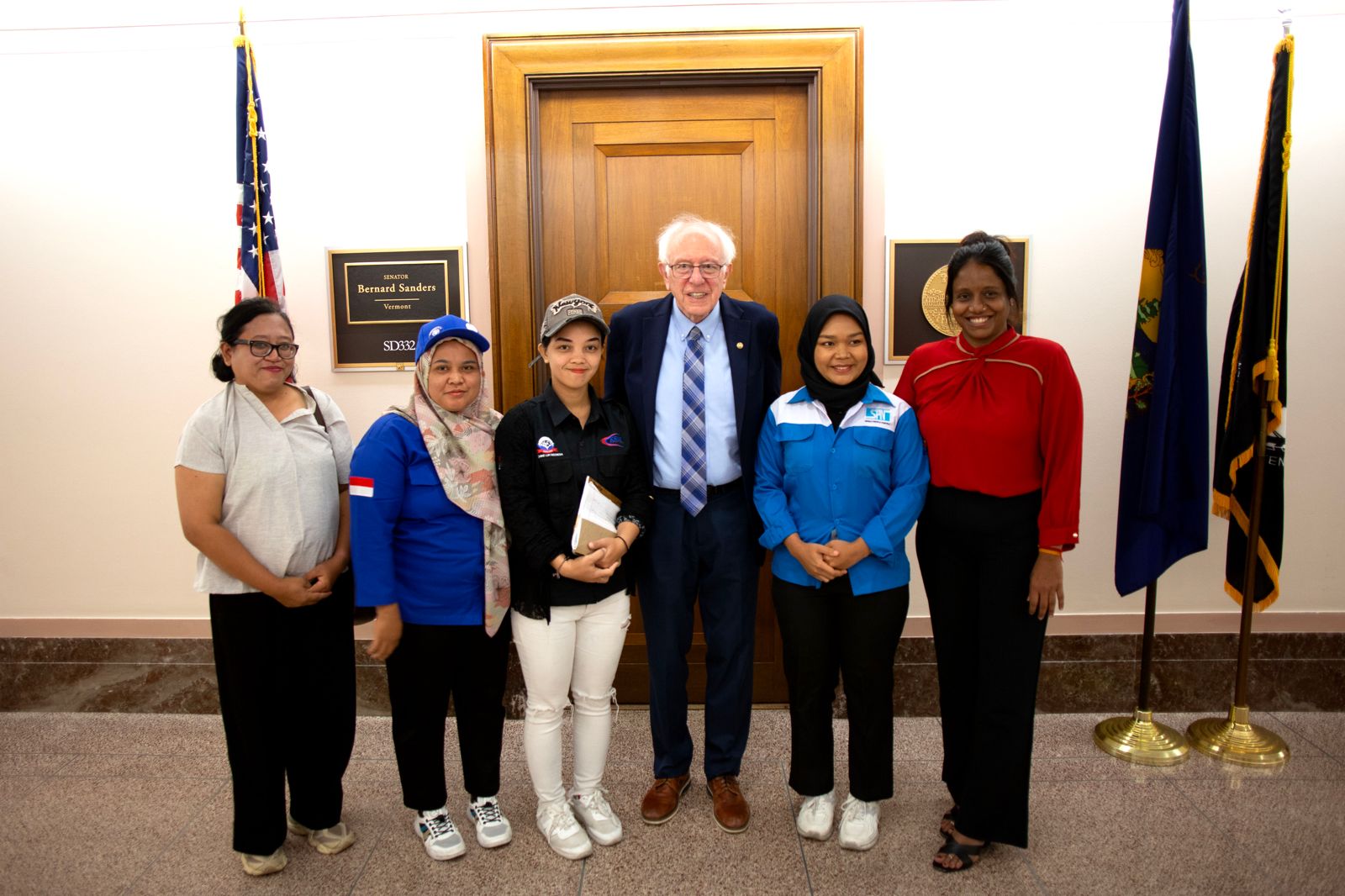
On the last day of the Worker Action Delegation, Leni, Dedeh, and Dinar brought the demands of Asian garment workers to the heart of U.S. political power. In Washington, DC, they met with U.S. Senator Bernie Sanders to share firsthand accounts about how workers in Nike’s supply chain are treated. The meeting underscored the need for global brands to be held accountable for labor violations they continue to deny. After hearing from the workers, Senator Sanders called Nike’s actions “corporate greed at its worst.”
Garment workers who make @Nike billions deserve living wages and human rights. Thanks @SenSanders for supporting the Fight the Heist campaign.
Proud to stand with workers, unions @asia_floorwage in this fight #SeeUsNike https://t.co/Peh0lD94ek
— Global Labor Justice (@global_labor) June 6, 2025
This final stop marked the conclusion of a powerful journey that began in Oregon and moved through New York and Philadelphia. At every stage, the workers challenged the Nike's public image and exposed the reality behind its profits—wage theft, union-busting, and gender-based violence and harassment. Their message across cities was clear: garment workers will no longer be ignored by brands that profit from their labor.
As the delegation closes, its significance extends beyond any single event. The voices of Dedeh, Leni, and Dinar have reached new audiences, built new alliances, and strengthened a transnational call for justice. Across Asia and around the world, thousands of garment workers and their allies are demanding what workers are rightfully owed. The Worker Action Delegation may have ended in Washington, but the movement it helped grow is only gaining momentum.
Stay tuned for more updates and read: Day Ten Of The Worker Action Delegation | Worker Activists Speak from Capitol Hill
Day Ten Of The Worker Action Delegation | Worker Activists Speak from Capitol Hill
June 5, 2025
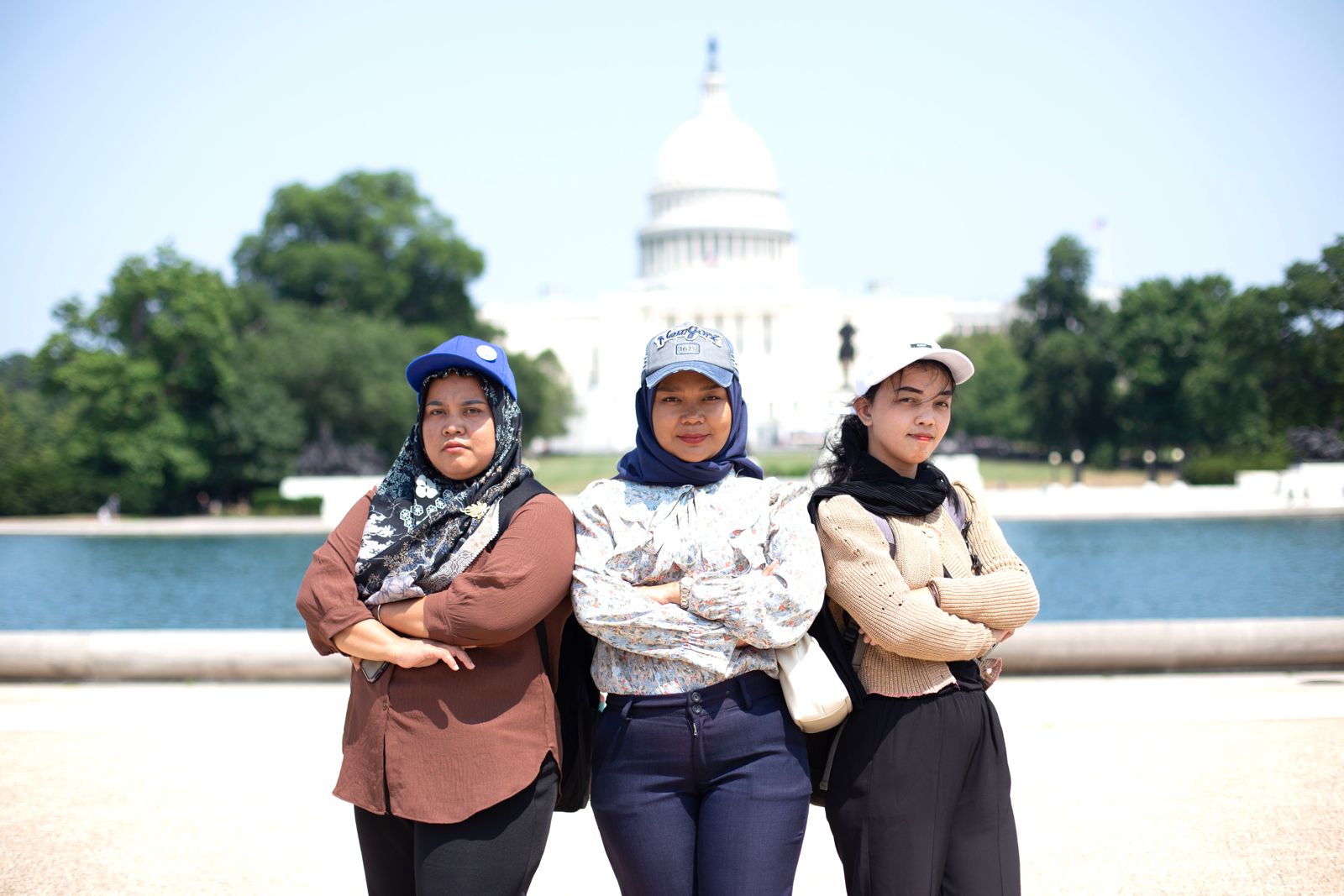
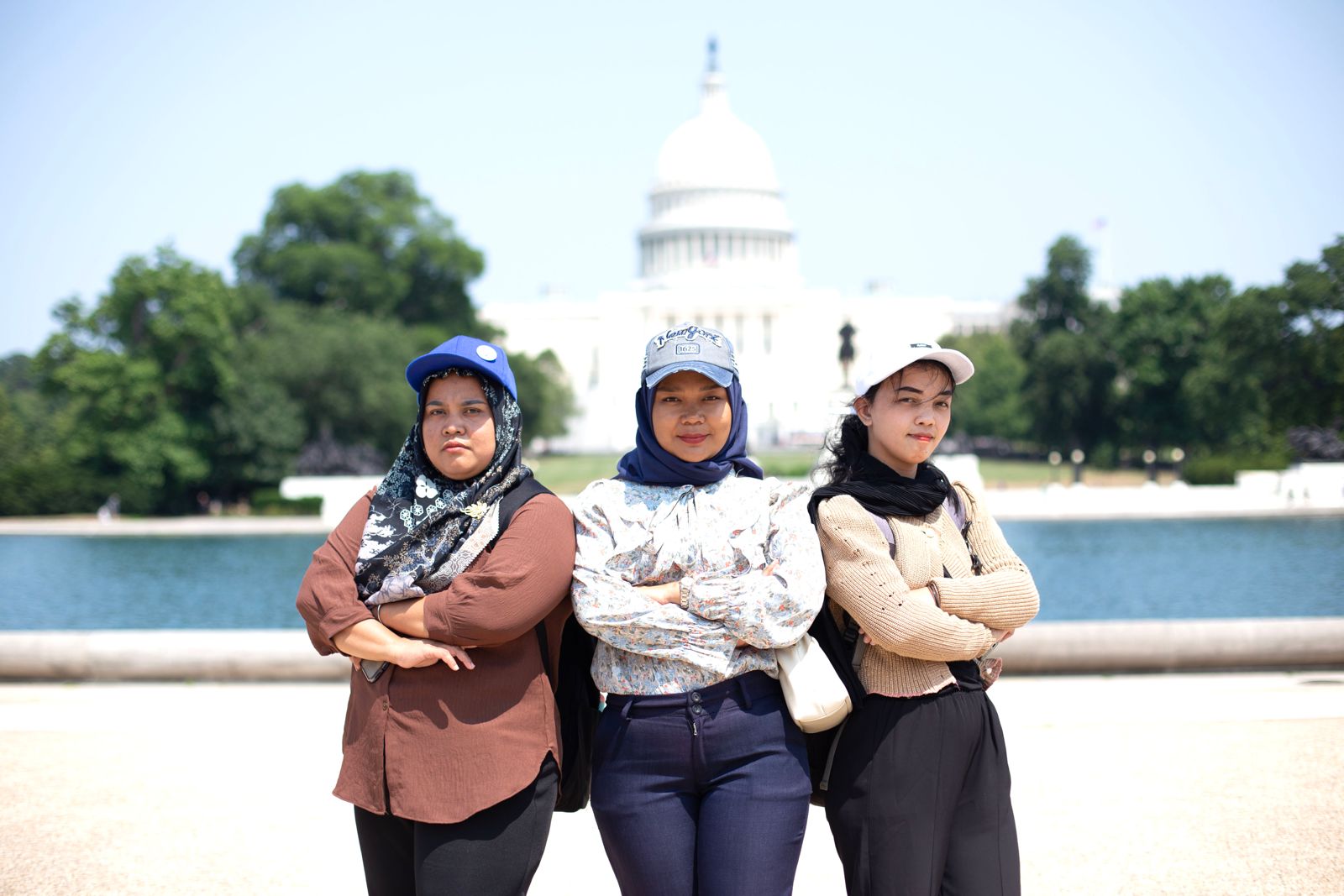
On Day Ten of the Worker Activist Delegation, Leni, Dedeh, and Dinar brought the voice of Asian garment workers directly to the U.S. capital—a global center of policymaking, federal legislation and movement building. At a public event on Capitol Hill attended by more than 70 people, they shared firsthand accounts of wage theft, union suppression, and gender-based violence and harassment inside Nike’s supply chain. These experiences are not isolated—they are widespread across the garment sector, and continue to be denied by brands that profit from them.
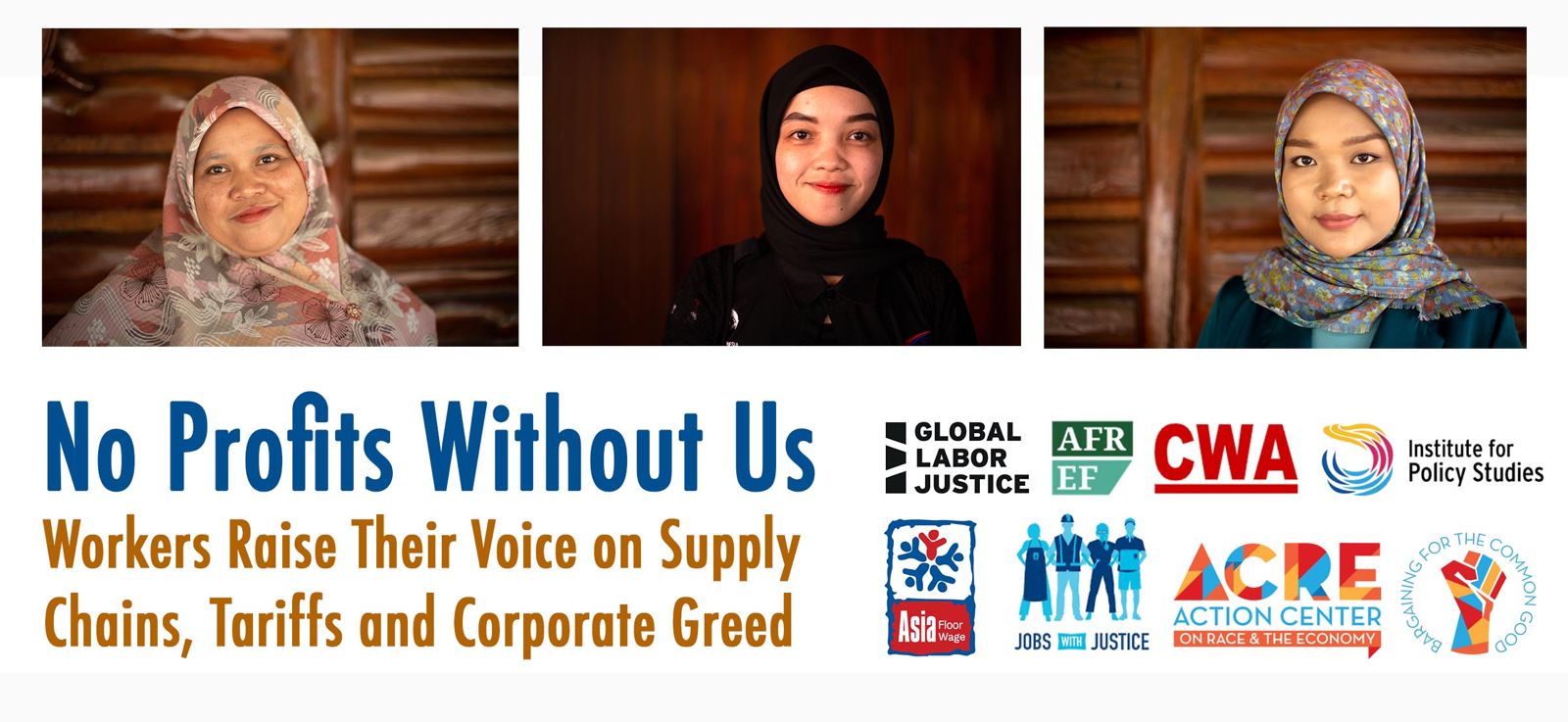 The event also included panelists Oliver Smith of the Communications Workers of America Union (CWA), Abiramy Sivalogananthan of Asia Floor Wage Alliance (AFWA), and Maryam Arain of the Action Center on Race and the Economy (ACRE). Together with the worker activists, they made clear that Nike’s business model depends on exploitation—and that global solidarity is essential to holding the company accountable. Speakers addressed the intersections of labor rights, profit mongering by brands, and U.S. trade policies that sustain the status quo.
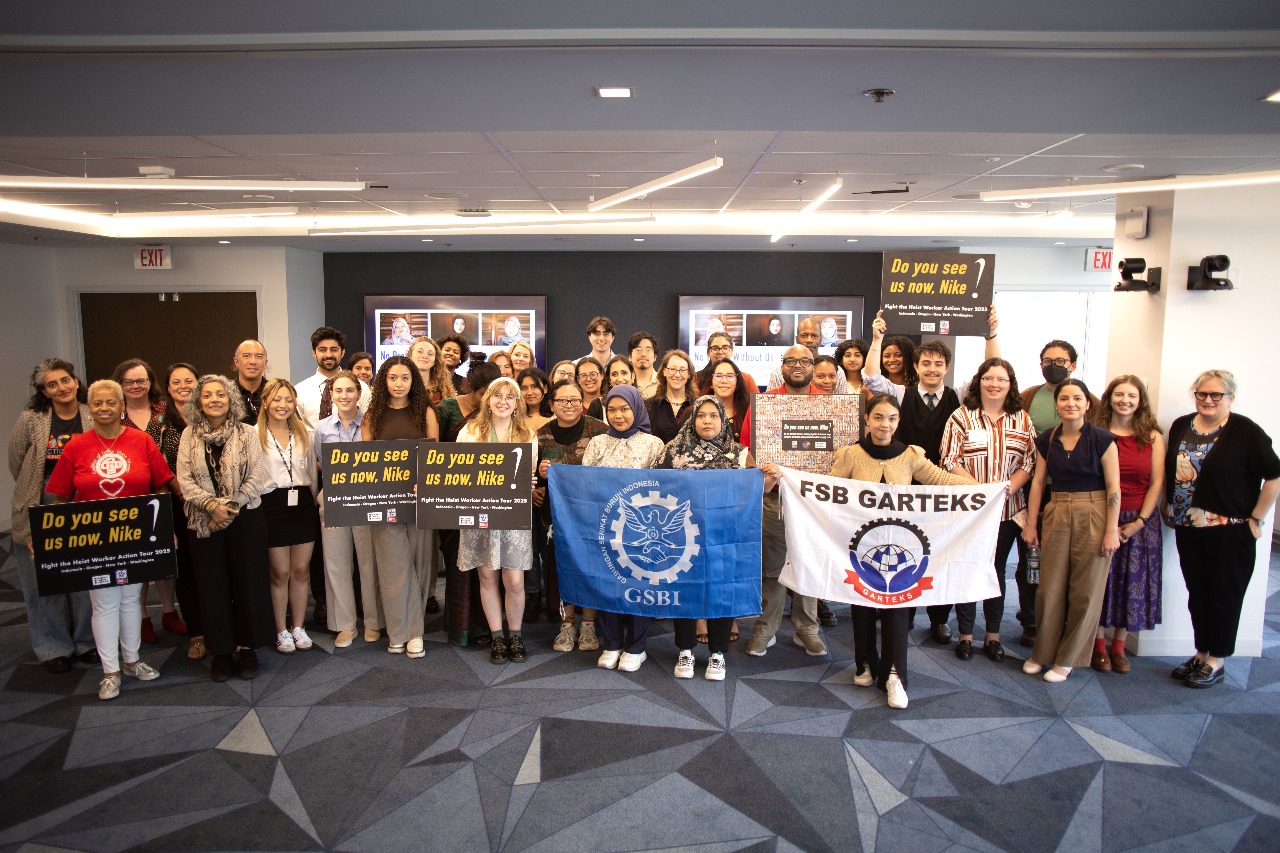 The Capitol Hill gathering marked a critical moment in the delegation—where worker voices moved from factory floors to federal platforms. Leni, Dedeh, and Dinar spoke not only for themselves, but for thousands of women across Asia who demand what they are owed. Their message to policymakers and the public was simple: there are no profits without workers, and there can be no justice without accountability.
Stay tuned for more updates and read: Day Eight Of The Worker Action Delegation | Across Cities, One Fight
Day Eight Of The Worker Action Delegation | Across Cities, One Fight
June 2, 2025
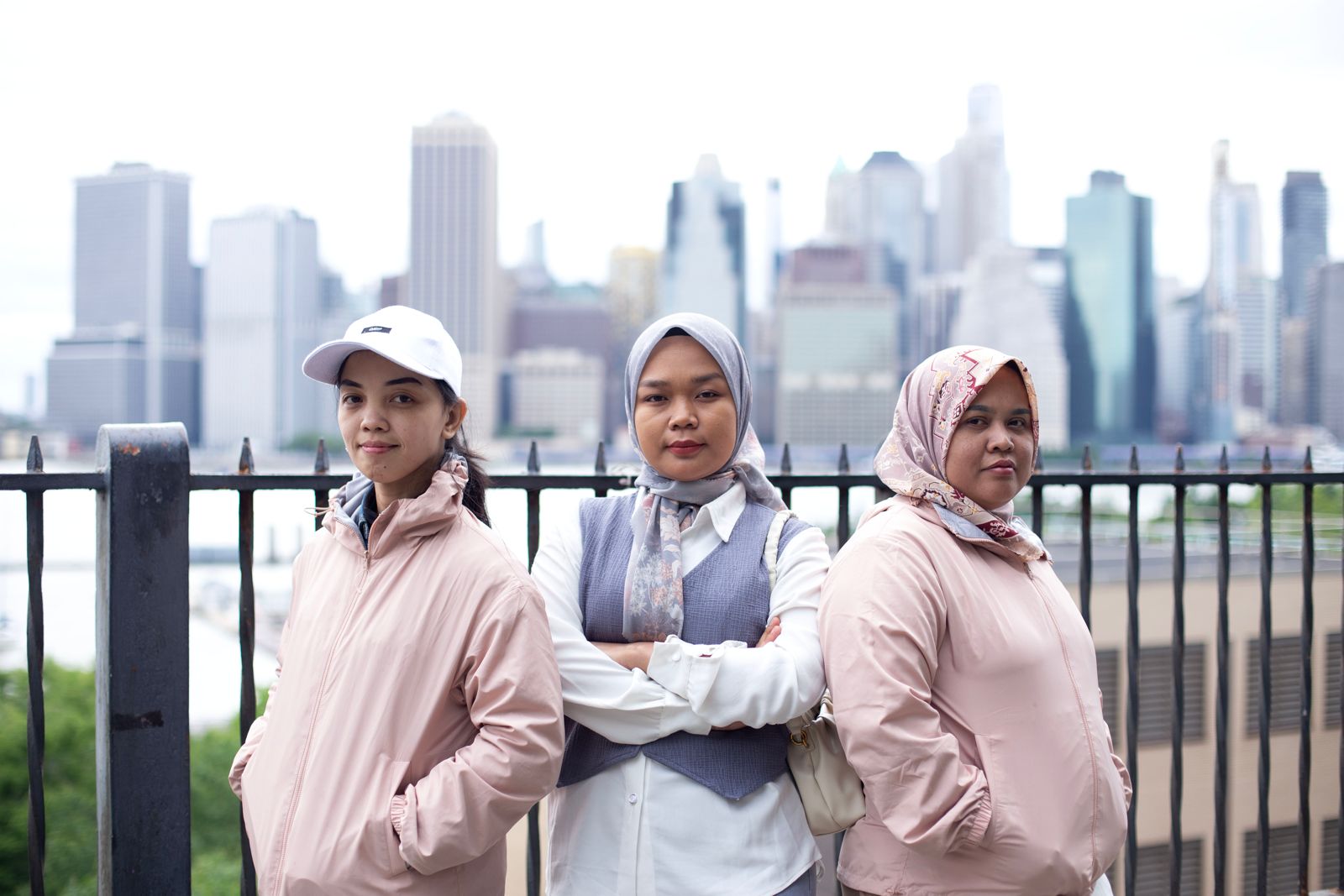
After their visit to the site of the Triangle Shirtwaist Factory Fire and gathering at Nike’s 5th Avenue store, Dedeh, Leni, and Dinar continued their journey—meeting with union members and more allies who share a commitment to holding brands accountable. In every city, they’ve made it clear: garment workers are organizing across borders, and they are naming the parties responsible for wage theft, union repression, and unsafe working conditions.
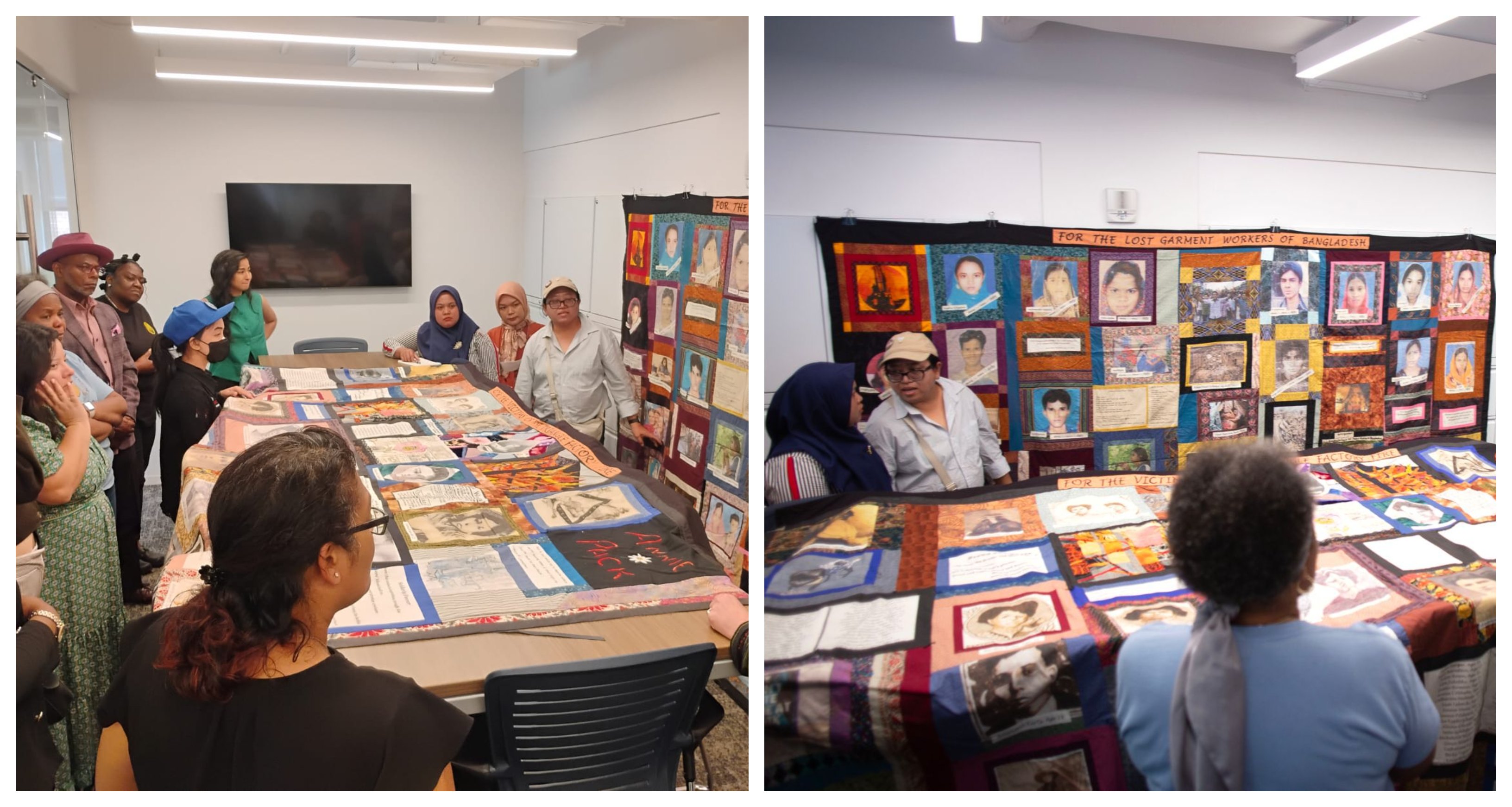 In New York City, the delegation met with the NYC Central Labor Council and the Desis Rising Up and Moving (DRUM) organization and visited a memorial quilt exhibit honoring the victims of the Triangle Shirtwaist Factory Fire and the Rana Plaza collapse. For the three worker activists, it was a stark reminder that factory disasters don’t happen in isolation—they happen in patterns, when profit is prioritized over people. The memorial connected past and present: the lives lost in New York over a century ago, the lives lost in Rana Plaza and the lives still being risked across global supply chains today.
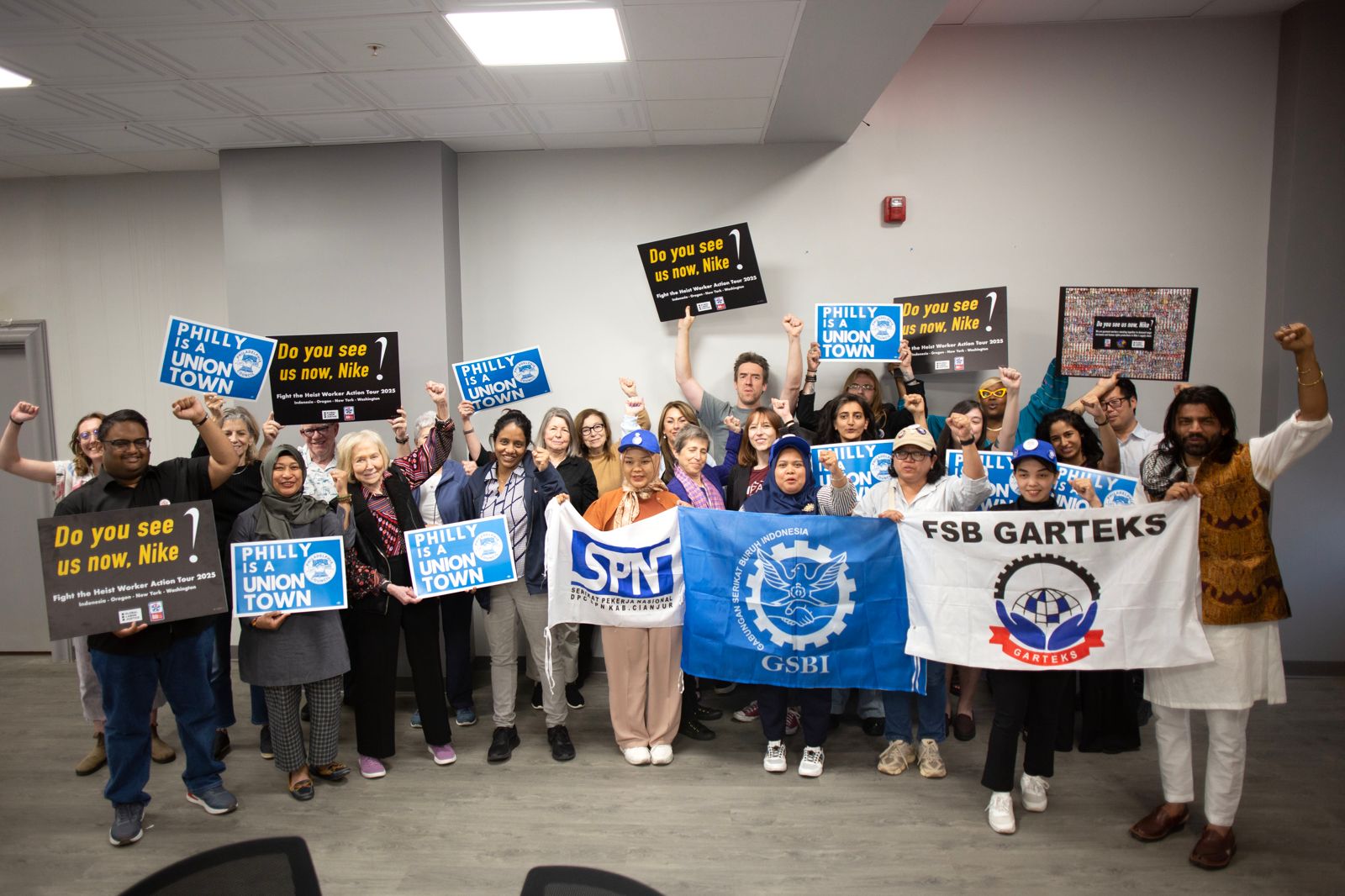 From New York, the workers activists continued to Philadelphia, where they met with more allies, including the Philadelphia Council AFL-CIO, the Philadelphia Coalition of Labor Union Women (CLUW), and the Action Center on Race and the Economy (ACRE). Together, they discussed the ongoing fight to make Nike pay what it owes to garment workers in its supply chain. These meetings were grounded in shared experiences of brand impunity, and in a collective commitment to challenging it through worker and union organizing and cross-border solidarity.
Stay tuned for more updates and read: Day Six Of The Worker Action Delegation | Nike, Triangle, and the Women Workers Still Fighting