
Migrant Garment Workers in India Are Going Hungry as Cooking Gas Prices Surge Amid Severe Shortages
Donate to Save Migrant Worker Families from Hunger!
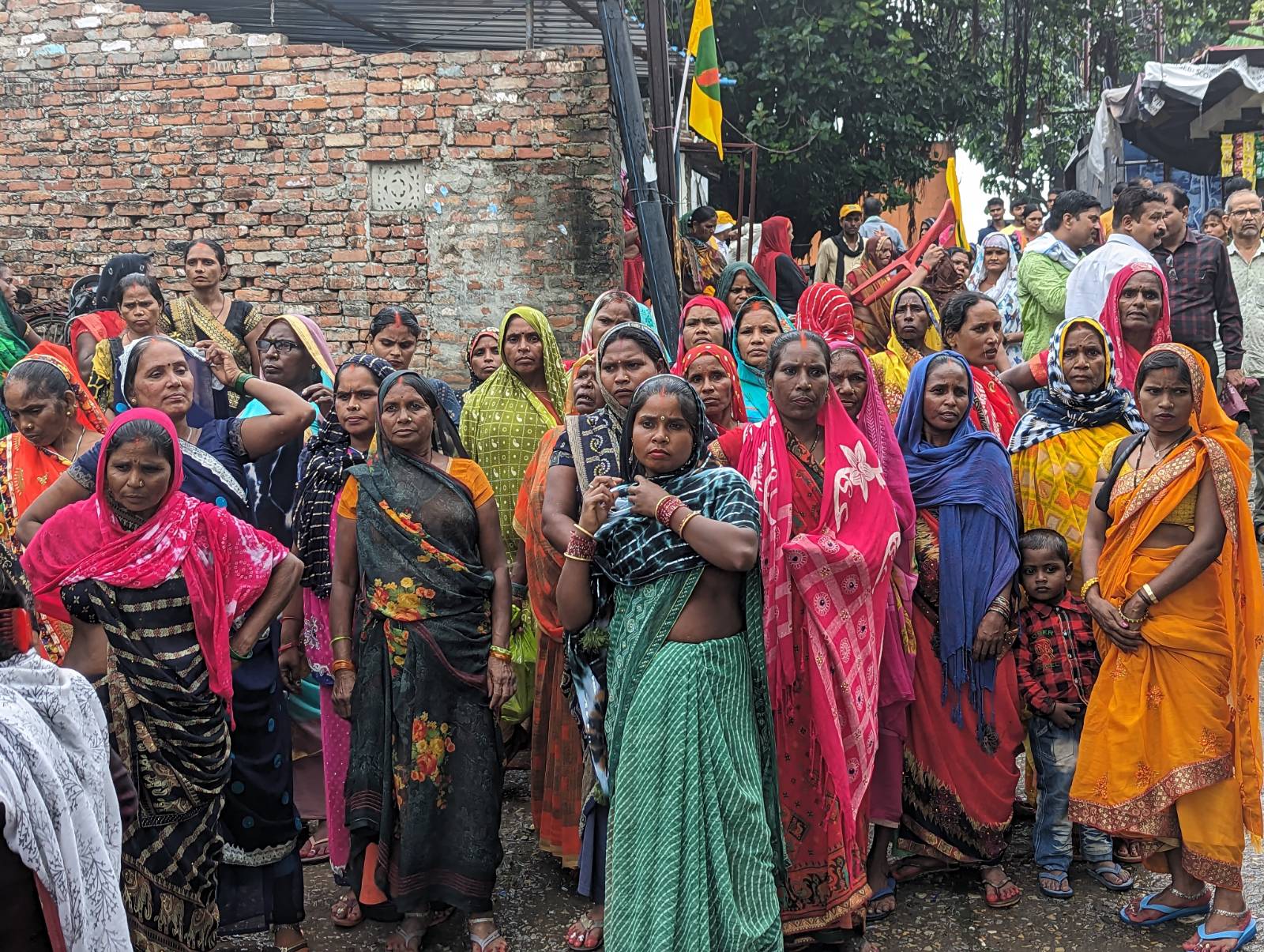
As global fuel disruptions linked to tensions in the Middle East and the Strait of Hormuz send cooking gas prices soaring, migrant garment worker families across Gurugram, Manesar, Faridabad – major garment hubs near India’s capital, New Delhi – are struggling to afford basic cooking fuel and feed their families.
Right now, across Gurugram, Manesar, and Faridabad – in the state of Haryana, located within the National Capital Region (NCR) – thousands of migrant garment workers who produce clothing for the major global fashion industry are going hungry. By next week, thousands more may be forced to abandon their jobs and return to their villages in desperation.
“Yesterday, my children slept after eating biscuits because we could not afford to refill our cooking gas cylinder,” says Sunita*, a migrant garment worker who migrated from the eastern Indian state of Bihar to work in a garment factory in Gurugram. “We came to the city to work hard and survive. Now we are wondering whether we should leave everything behind and return to our village.”
Migrant worker families are facing a growing humanitarian crisis as Liquefied Petroleum Gas (LPG) – the major sources of cooking fuel used across India – becomes increasingly expensive and difficult to access following disruptions to global energy shipments linked to conflict around the Strait of Hormuz, a critical shipping route through which much of the world’s oil and gas supplies pass.
Workers report that cooking gas cylinders, which normally cost around Indian Rupees (₹)900–₹1,100 (US$9.5-$12 / €8–€10) – already about 6–7% of a garment worker’s monthly income, are now either unavailable or being sold on the black market for as much as ₹4,000 (US$43 / €37) . A standard 14.2 kg cooking gas cylinder typically lasts a family about one month, depending on household size and cooking needs. Most garment workers in these factories earn roughly ₹15,000- ₹16,000- (US$158–$167/ €135–144) per month, meaning a single cylinder can now consume nearly half a month’s wages.
Some workers have already stopped cooking altogether. Others are surviving on biscuits, soaked beans, borrowed food, or just one meal a day. And many families are preparing to leave the city within the coming weeks because survival has become impossible.
Families Are Leaving Now
The Gurugram-Manesar-Faridabad industrial belt near New Delhi is home to nearly 1.5 million migrant workers employed across garment, automotive and electronics factories.
Garment workers remain among the most vulnerable because of:
- Low wages
- Insecure contracts
- Rising debt
- Lack of savings or social protection
Now the cooking gas crisis is pushing workers from economic insecurity into hunger and displacement.
“People think migration happens because workers want to leave,” says Devi, a garment worker from Uttar Pradesh, a Northern Indian state. “But nobody wants to abandon the life they built here. We are leaving because hunger leaves us with no choice.”
Many workers live with their families in single-room rented housing and densely packed informal settlements where landlords prohibit firewood or open-flame cooking because of the high risk of fire spreading in crowded living spaces. Families are trapped between unaffordable cooking gas and no alternative cooking option.
Like during the COVID-19 lockdowns, reverse migration has already begun. Yet for many workers, returning to their villages does not mean safety or stability, but only unemployment, debt, and deeper food insecurity.
Worker groups estimate that nearly 50% of workers in some industrial areas have already left or are preparing to leave soon.
Without immediate support, many more families may be forced out over the next few weeks.
An Immediate Relief Response
To respond to the emergency, the Garment and Allied Workers Union (GAWU), a union representing garment and factory workers and advocating for their wages, rights, and working conditions in India, along with Asia Floor Wage Alliance (AFWA), has launched the Emergency Cooking Fuel and Hunger Relief Fund for vulnerable garment worker households.
The goal is to help workers cook safely and affordably again immediately!
Each relief kit, costing approximately ₹4,200 (about US$43 / €38) per family, includes:
- A BIS-certified ((Bureau of Indian Standards – India’s national product safety standards authority) induction cooktop
- An induction-compatible pressure cooker and cookware set
- Safety and energy-use instructions in local languages
The first phase aims to support 300 garment worker families across Gurugram, Manesar, and Faridabad.
Your Urgent Action Needed
Donate NOW to prevent hunger and displacement:
- ₹4,200 (US$43 / €38) helps 1 family cook again
- ₹21,000 (US$222/ €190) helps 5 families remain in the city and continue working
- ₹42,000 (US$430/ €380) helps 10 families survive this crisis
Total Goal: ₹13.1 lakh (US$13,815 / €11,800)
This emergency response will support:
- 300 induction cooktops
- Cookware and pressure cooker sets
- Logistics and emergency distribution
Every donation, no matter the size, helps workers’ families continue cooking, living, and working with dignity.
“We stitch clothes for some of the world’s biggest brands,” says Rakesh, a migrant worker from Bihar. “But today many of us cannot even afford to cook rice.”
Thousands of garment worker families are struggling to prepare meals today.
Your support can help workers:
- Continue cooking meals and prevent hunger at home
- Remain in the city and avoid displacement
- Sustain their livelihoods during this crisis
AFWA, along with GAWU, is calling on donors, labour rights allies, solidarity groups, and supporters to urgently contribute to this relief initiative and stand with migrant garment workers facing an escalating humanitarian crisis.
*Names changed to protect workers from retaliation and targeting.
*All international currency amounts are approximate and based on current exchange rates.