OUR PUBLICATIONS

The Dindigul Agreement to End Gender-based Violence and Harassment: Has it Worked?
This comprehensive report confirms the Dindigul Agreement successfully met its objectives in preventing, remediating, and eliminating gender-based violence and harassment (GBVH). By centering Freedom of Association (FOA), the agreement established mature industrial relations between the union, Tamil Nadu Textile and Common Labour Union (TTCU), and management at Natchi Apparels and Eastman Spinning Mills.
The report demonstrates that this success is built on its multi-tiered, survivor-centred grievance mechanism. Central to this are the Worker Shop Floor Monitors, who identify and prevent harassment on the production lines before it can escalate into more severe forms of GBVH. This is reinforced by regular dialogue between the union and management, which ensures that grievances are resolved quickly – often within a single week. The framework redefines workers’ safety and dignity as a contractual requirement that serves as a model for the global garment industry.
Read the full report here: English
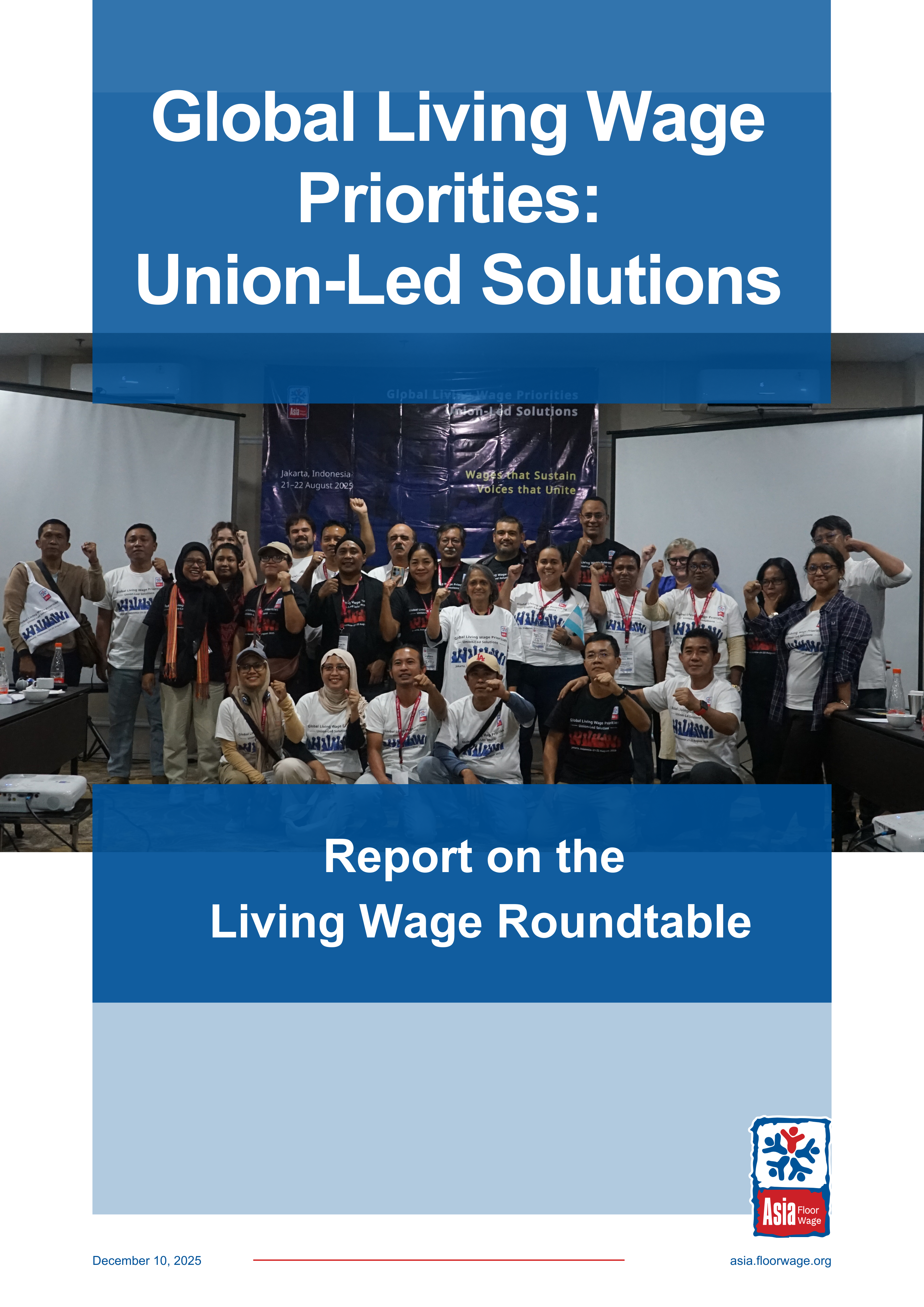
Global Living Wage Priorities: Union-Led Solutions Roundtable Report
On 21–22 August 2025, trade union leaders and worker organisations from Asia, Africa and Latin America convened at the Nemuru Grand Suites in Jakarta, Indonesia for the roundtable Global Living Wage Priorities: Union-Led Solutions. Organised by Asia Floor Wage Alliance (AFWA), the meeting was held in direct response to the ILO’s historic decision in 2024 to operationalise living wages. Participants came together to build a shared analysis and forge a worker-led strategy for advancing living wages with a focus on the global garment supply chain. The roundtable brought together representatives from Bangladesh, Cambodia, India, Indonesia, Pakistan, Sri Lanka, Morocco, Honduras, and Mexico.
Across two days of intensive discussions, participants rooted their analysis in the global garment, textile, and footwear supply chain—an emblematic labour-intensive sector employing at least 70–75 million workers, the vast majority women based in the Global South. They highlighted how brand-controlled global value chains, aggressive price squeezing, relocation threats, and fragmented production systems have produced a pattern of wages held below the cost of reproduction of labour. Testimonies underscored widespread informality, job insecurity, forced overtime, anti-democratic union practices, and the deepening impacts of gender-based violence and harassment. Participants affirmed that while the ILO’s recent breakthrough opens political space, decades of appeals to governments and employers show that advancing living wages requires a united Global South agenda grounded in union power, international solidarity, and enforceable obligations on brands.
This roundtable brings into focus the collective commitments that emerged across Asia, Africa, and Latin America. To understand these convergences and the direction set by unions and worker organisations, read the full report here: English | Vietnamese
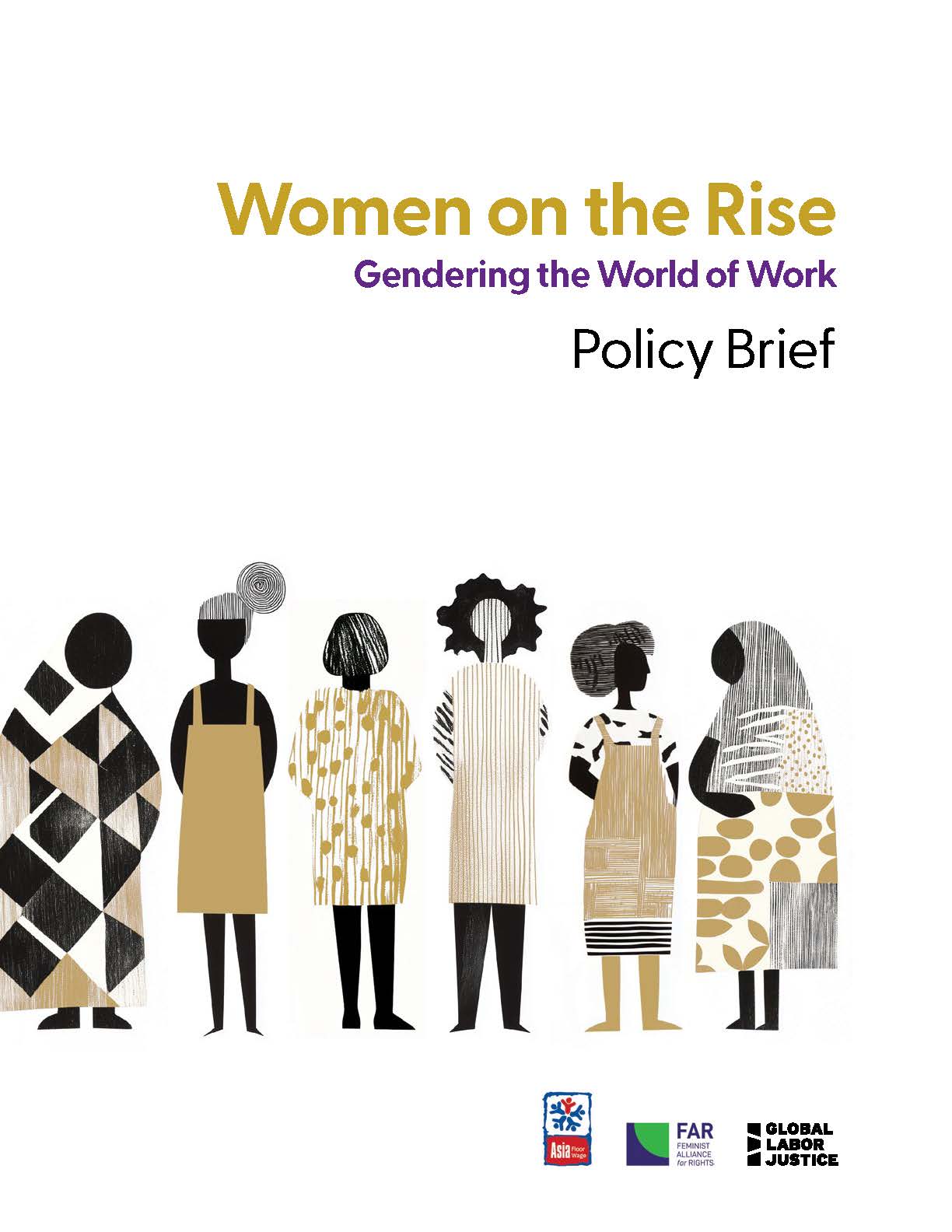
Women on the Rise: Gendering the World of Work
The policy brief is a joint publication of Asia Floor Wage Alliance (AFWA), Global Labor Justice (GLJ), and Feminist Alliance for Rights (FAR). This policy brief highlights women’s paid and unpaid labor as the cornerstone of gender equality and specifically addresses GBVH in the world of work. The brief demonstrates the links between ILO C190 and two critical areas of concern within the Beijing Declaration and Platform for Action: Violence against Women, and Women and the Economy.
Click here to read in: English

Dindigul Agreement Year 2 Progress Report: 76% of Grievances Resolved Within Two Weeks
In its second year, the Dindigul Agreement has demonstrated significant progress in eliminating gender-based violence and harassment (GBVH) at Eastman Exports' Natchi factory. Of the 30 GBVH-related issues (out of 242 total grievances raised), 76% were resolved within two weeks, reflecting the strong collaboration between workers, unions, and management. The Year 2 report highlights the vital role of Freedom of Association (FOA) in improving working conditions and addressing grievances.

Threaded Insecurity – The Spectrum of Informality in the Garment Sector
AFWA’s latest report, ‘Threaded Insecurity – The Spectrum of Informality in the Garment Sector,’ focuses on informal employment within the formal sector, providing a new framework for understanding informality in garment and other global supply chains as a spectrum of informalisation practices linked to brands’ purchasing practices.
Read the full report here: English
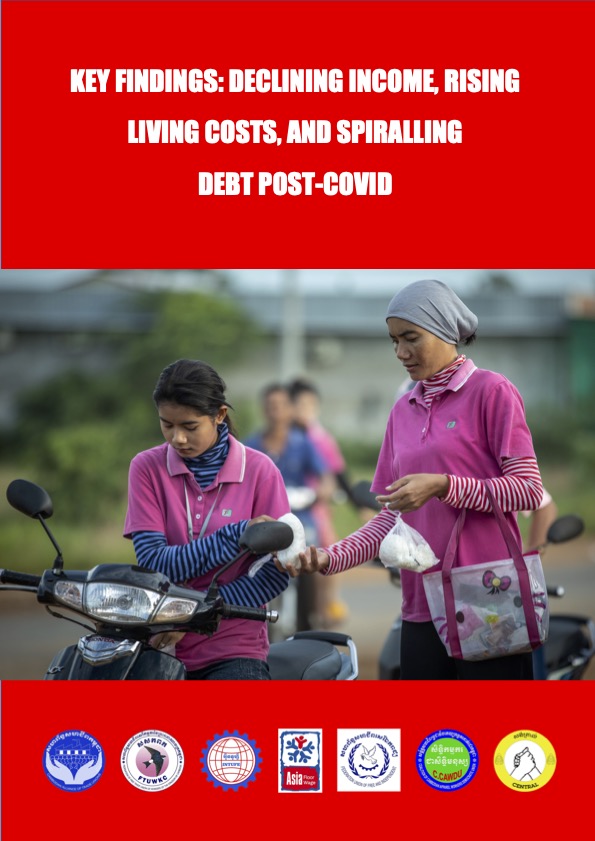
Cambodian garment workers in distress: Declining Incomes, Rising Living Costs, and Spiralling Debt Post-Covid | CENTRAL
Three years after the COVID-19 crisis, Cambodian garment workers are still reeling from the effects of the crisis on their livelihoods and economy. Worker surveys indicate that the vast majority have been unable to repay debt incurred during the lockdowns, their effective income has decreased, and basic living expenses have increased due to inflation. This paper by CENTRAL, Cambodia, compiles the key findings of surveys conducted by different organisations, including Asia Floor Wage Alliance, to assert the need for a significant minimum wage increase in the Cambodian garment industry.

Dindigul Agreement: Year One Progress Report | 2023
One year after the signing of the historic Dindigul Agreement, a new report documents how major global fashion companies, a clothing and textile supplier and labor organizations have empowered women garment workers including migrants in India to respond to and eliminate gender-based violence and harassment (GBVH) and caste-based discrimination and win more rights in their workplace.
Click here to read in: English

Towards a Woman-Centred Living Wage Beyond Borders
The Asia Floor Wage (AFW) is a woman-centred, cross-border living wage figure that takes into account the food and non-food costs of an Asian garment worker. In 2022, AFWA released new living wage figures, after surveying 1,686 garment workers from 27 trade unions in seven countries. Here are the detailed results.
Click here to read in: English

Big Fashion & Wall Street Cash in on Wage Theft
Asia Floor Wage Alliance (AFWA) and Global Labor Justice - International Rights Forum (GLJ-ILRF), in cooperation with 20 garment worker unions in six Asian countries, have published a report, detailing how the wage theft of Asian garment workers, directly led to high corporate profits for global fashion brands like Nike.
Click here to read in: English

Fact-finding Report into Labour Violations at Shahi Factory, Kuppam, Andhra Pradesh, India
First-hand testimony from women workers informs new fact-finding report on workers’ rights violations at Shahi Factory in Andhra Pradesh’s Kuppam (India). A month after 2,000 workers from the Shahi Exports factory – Unit 44 gathered to protest outside their factory, a report has been published by AFWA, detailing a wide range of labour rights violations, including gender-based violence and harassment at the factory, which supplies to US-based Columbia Sportswear.
Click here to read in: English
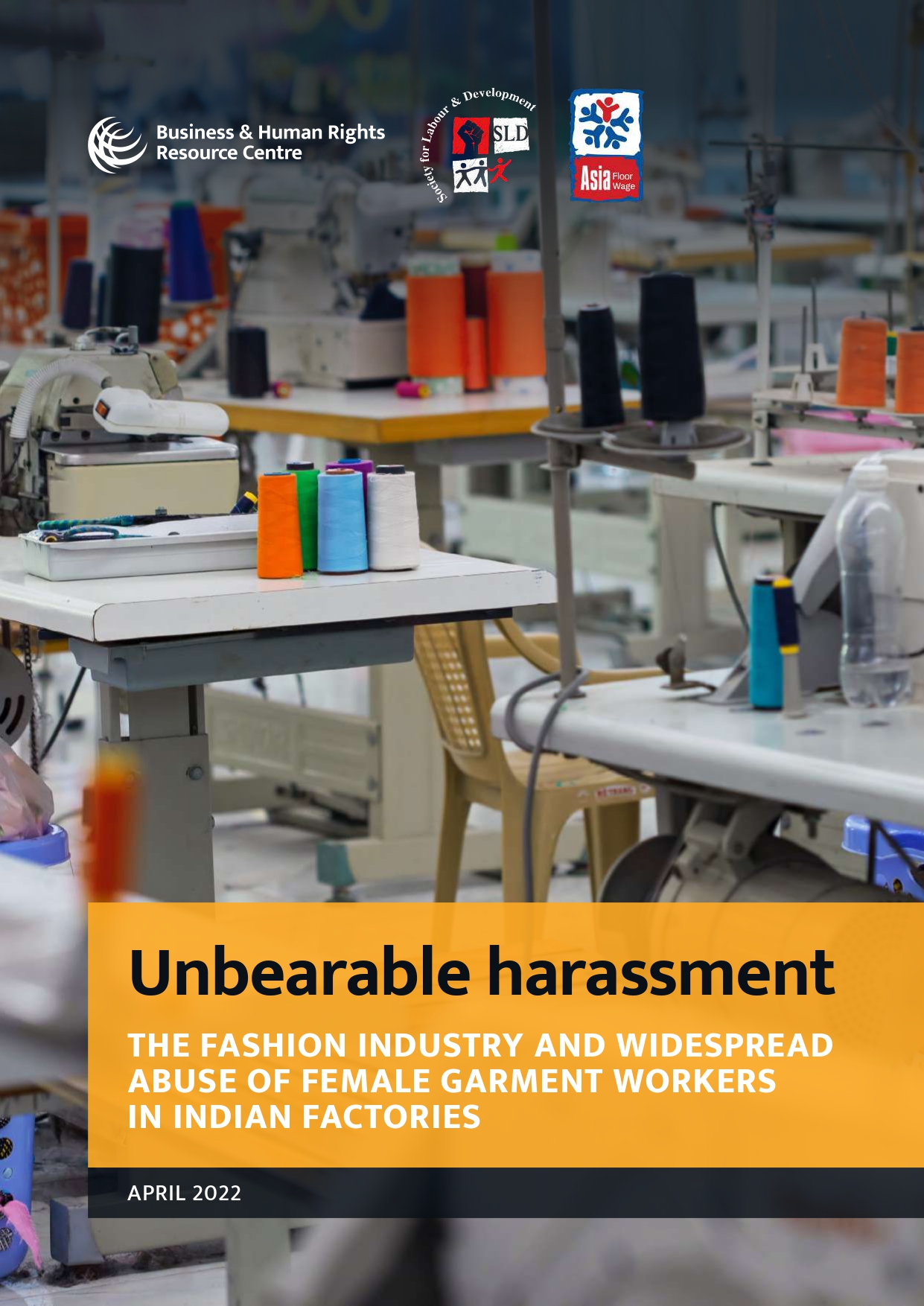
Unbearable Harassment: The Fashion Industry and Widespread Abuse of Female Garment Workers in Indian Factories
Garment worker abuse in India’s factories intensified due to fashion brands’ response to the COVID-19 pandemic, according to a new report from the Business & Human Rights Resource Centre, Asia Floor Wage Alliance and Society for Labour and Development. The report cites testimonies from 90 women in 31 factories across three major garment-producing hubs in India: Delhi NCR, Karnataka and Tamil Nadu.
Click here to read in: English

Voices from the Field: Reprisals and Repression of Garment Worker Unions and Workers Organizations During COVID-19 in Sri Lanka
The report, written by AFWA with GLJ-AFWA, details human rights violations against garment workers by Sri Lanka's largest garment manufacturer Brandix Lanka and the government, at the outset of the country's second wave of COVID-19 in October 2020. It highlights how the two parties created a COVID crisis, and then brutally repressed those who spoke up about it.
Click here to read in: English
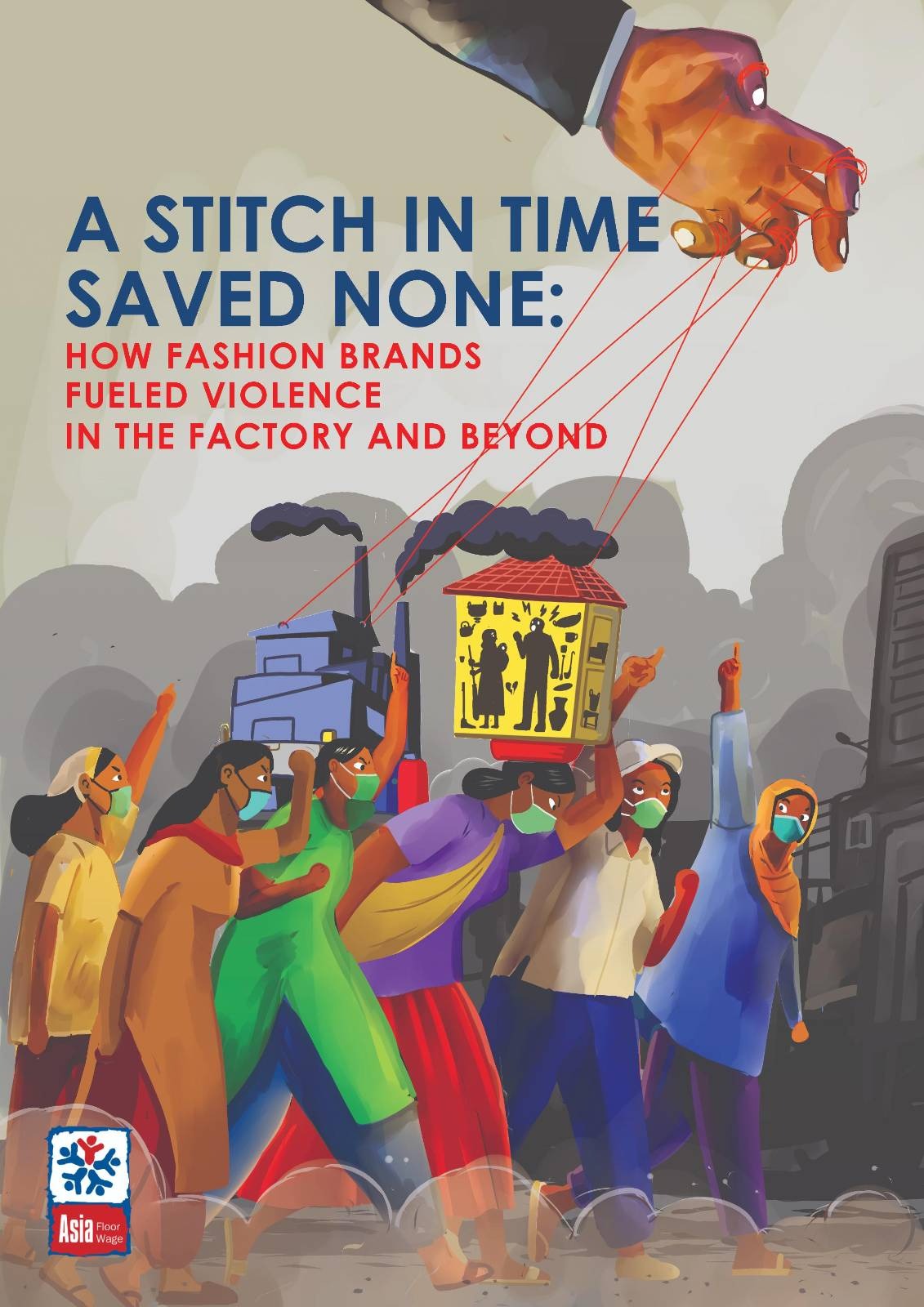
A Stitch in Time Saved None: How Fashion Brands Fueled Violence Beyond the Factory
AFWA's report documents gender-based violence in fast fashion supply chains. The report, based on interviews with 400+ women workers across 6 Asian countries, explores how the business models of global fashion brands exacerbated garment workers' vulnerability to violence both inside the factories and in their homes, families and communities.
Click here to read in: English

Money Heist: COVID-19 Wage Theft in Global Garment Supply Chains
This report is the outcome of interviews with 2000+ garment workers from 189 factories across 6 countries to find out how 15 global fashion brands pushed thousands of workers below the poverty line in Asia, perpetrating large-scale wage theft against them.
Click here to read in: English

Joint Employer Liability Legal Strategy | Legal Brief
AFWA conceptualized a legal brief titled "Joint Employer Liability Legal Strategy: Holding Global Apparel Brands Legally Liable for Labour Rights Violations in their Supply Chains in Asia," to discuss legal actions that garment workers’ unions in Asian production countries could take to hold global apparel brands liable as Joint Employers for payment of workers’ wages and benefits during COVID-19.
Click here to read in: English

Garment Workers Under Threat from Labour Deregulation in Asia
Last year, as we witnessed governments across Asia hurriedly passing legislation eroding workers’ and trade unions’ rights, AFWA worked with partner unions to understand and analyse the fast-moving changes. As a result of that collaboration, AFWA is now releasing its report- ‘Garment Workers under Threat from Labour Deregulation in Asia – A Review of recent Labour and Employment Law changes in Cambodia, India, Indonesia and Sri Lanka’. The report is a comparative analysis of labour law changes across Asia and highlights the commonalities across these nations.
Click here to read in: English
The Emperor Has No Clothes: Garment Supply Chains in the Time of Pandemic (Issue III)
The third issue of “Emperor Has No Clothes” highlights the challenges that suppliers, in particular, Micro, Small and Medium Enterprises (MSMEs) face due to the Covid-19 lockdown measures and reduced business activities, and how these challenges translate into increased risk and burden of liability for garment workers. This issue brings together discussions on the impact of, and response to, COVID-19 by suppliers and garment unions.
The Emperor Has No Clothes: Garment Supply Chains in the Time of Pandemic (Issue II)
The second issue of the “Emperor Has No Clothes” lays special emphasis on the issues around wage payment, support mechanisms and layoffs of garment workers, specifically in Cambodia, India, Indonesia, Myanmar and Sri Lanka. Most importantly, the report presents a typology of discriminatory practices in the labour market that account for the immediate impact of the pandemic on garment workers in terms of access to employment.

The Emperor Has No Clothes: Garment Supply Chains in the Time of Pandemic (Issue I)
The first issue of the series ‘The Emperor Has No Clothes: Garment Supply Chain in the Time of Pandemic’ looks at how the COVID-19 pandemic has affected garment workers in four major textile and apparel production countries: Cambodia, India, Indonesia and Sri Lanka. The report lays special emphasis on the impact of the pandemic and institutional responses in four dimensions, viz. wage disbursal, social security, migration, and healthcare.

Safe Circle Approach: AFWA’s Step-by-Step Approach to Prevent Gender-Based Violence
The Asia Floor Wage Alliance (AFWA) Safe Circle Approach introduces our approach to addressing gender-based violence on garment production lines. Designed to complement existing training, the AFWA Safe Circle Approach involves potential “victims,” “bystanders,” and “perpetrators” in face-to-face, regular, small-group engagement processes designed to address behavioral violence on the production line.

Violence Against Women and Men in the World of Work
This report contains the executive summary on our research on gender-based violence in GAP, H&M, and Walmart garment supplier factories in Bangladesh, Cambodia, India, Indonesia, and Sri Lanka between February and May 2018. It also provides recommendations to address workplace violence and harassment.
Click here to read in: English

Gender-Based Violence in the Walmart Garment Supply Chain | ILO Report 2018
This report is based upon six years of documentation of gender-based violence and decent work violations in Walmart garment supply chains by Asia Floor Wage Alliance (AFWA) partners. It includes the results of interviews and focus group discussions with 250 workers employed in 60 Walmart supplier factories across Bangladesh, Cambodia, and Indonesia.
Click here to read in: English

Gender-Based Violence in the GAP Garment Supply Chain | ILO Report 2018
This report is based upon 3 years of AFWA documentation of decent work violations and gender-based violence in GAP garment supply chains. It includes the results of interviews and focus group discussions with 238 workers employed in 23 Gap supplier factories across Bangladesh, Cambodia, India, Indonesia, and Sri Lanka.
Click here to read in: English

Gender Based Violence in the H&M Garment Supply Chain | ILO Report 2018
This report is based upon 3 years of AFWA documentation of decent work violations and gender-based violence in H&M garment supply chains. It includes the results of interviews and focus group discussions with 331 workers
employed in 32 H&M supplier factories across Bangladesh, Cambodia, India, Indonesia, and Sri Lanka.
Click here to read in: English

A Short History at the Brink of Transition | Our Ten-Year History
As Asia Floor Wage Alliance enters a new phase, we feel it is important to document the past. Published in 2017, this is a short history of our decade-old campaign to ensure minimum living wages for garment workers across Asia using a women-centered formulation. Our ten-year history document titled, "A Short History at the Brink of Transition".
Click here to read in: English
Precarious Work in the H&M Global Value Chain | ILO Report 2016
This report shed light on the intensive labour exploitation and abuse faced by workers in H&M supply chains, in particular in Cambodia and India. This report is based upon 251 structured interviews conducted between August and October 2015 with garment workers in Phnom Penh, Cambodia and the Delhi, National Capital Region (NCR), India.
Click here to read in: English

Precarious Work in the GAP Global Value Chain | ILO Report 2016
This report sheds light on the persistent rights violations faced by precarious GAP supply chain workers in Bangladesh, Cambodia, India and Indonesia. It is based on 150 structured interviews conducted between August and October 2015.
Click here to read in: English

Precarious Work in the Walmart Global Value Chain | ILO Report 2016
This report presents new research on violations of international labor standards in Walmart garment supplier factories. Information was collected through interviews and focus group discussions with 344 workers who were working in Walmart supply chains across Bangladesh, Cambodia and India.
Click here to read in: English

Towards an Asia Floor Wage: A Global South Labour Initiative for Garment Workers in Asia
This publication is the result of a collaborative effort between Asia Floor Wage Alliance and the South Solidarity Initiative and ActionAid India to explore the processes for making the living wage a reality in global supply chains for the garment industry in Asia.
Click here to read in: English

New Findings on Conditions Across Walmart’s Garment Supplier Factories in Cambodia, India and Indonesia
Walmart is not just a retailer; it is also the largest private employer in the world and dominates the global supply chains of nearly every consumer product - including garments. This study documents several heinous cases of abuse in Walmart garment-supplier factories, covering three of the six major countries that supply to Walmart.
Click here to read in: English
Living Wage in Asia | AFWA – Clean Clothes Campaign
Asia Floor Wage Alliance and Clean Clothes Campaign collaborate on this report to look at the low wages being paid across six of the major garment-producing countries in Asia – Cambodia, China, Bangladesh, India, Malaysia and Sri Lanka.
Click here to read in: English

Wage Structures in the Indian Garment Industry
This study on the Indian ready-made garment industry brings to light the prevailing dynamics with regard to wage and working conditions in this sector. On the basis of a field study conducted in the garment clusters of Gurgaon, Bangalore, and Tirupur, this study highlights the wage theft and forced labor practices pursued by businesses in this sector.
Click here to read in: English

General Wage Situation of Apparel Industry Workers in Sri Lanka
The report provides an overview of the Sri Lankan garment industry and the wage situation of Sri Lankan garment industry workers.
Click here to read in: English
Asia Floor Wage and Global Industrial Collective Bargaining
This essay, published in the International Journal of Labour Research, and co-authored by Anannya Bhattacharjee and Ashim Roy, explains the development of Asia Floor Wage as a cross-border living wage benchmark for garment workers in Asia and its significance for global brand bargaining.
Click here to read in: English

Route Map to an Asia Floor Wage: 10 Steps Brands and Retailers Can Take Towards Implementing a Minimum Living Wage
Asia Floor Wage Alliance and Clean Clothes Campaign collaborated on this publication to list ten steps global brands can take towards implementing a minimum living wage for garment workers in Asia, who produce their clothing.
Click here to read in: English

Raising Wages on a Regional Level: The Asia Floor Wage
Workers in a global economy must find regional and, ideally, global solutions to improve their wages and working conditions. As there are some examples of industry-wide wage setting, this study examines these to see what lessons they hold for the prospect of the Asia Floor Wage: a campaign to set garment workers’ wages on a regional basis.
Click here to read in: English

Raising the Floor: The Movement for a Living Wage in Asia
The neoliberal "free trade" model of development has failed to raise the standard of living for most of the world's people. In this report, AFWA argues that only a regional wage standard - one that is based on labor rights and prioritizes the demand for a living wage - can.
Click here to read in: English
Search